












Careers

View All

Big 4

View All
weight bar at the gym

Someone at Deloitte’s Atlanta Office Doesn’t Rerack the Gym Equipment

So I saw this tweet last night as it was making the rounds. If you're still on Xitter you may have seen it too: If you're a long-time GC reader…

Read More
exterior of PwC building

Evergrande Liquidators Want to Take an Extra Grande Bite Out of PwC’s Whole Pocket

It's already cost PwC China as much as two-thirds of their revenue due to regulatory punishments and reputational fallout, and now the collapse of long-time audit client Evergrande in 2021…

Read More
Exterior EY building

EY Gets Busted and Yeets Cybersecurity Report Littered With AI Hallucinations

Yesterday we received a news release from a communications firm working for a group called GPTZero. Now you should know that we receive probably a hundred or more news releases…

Read More
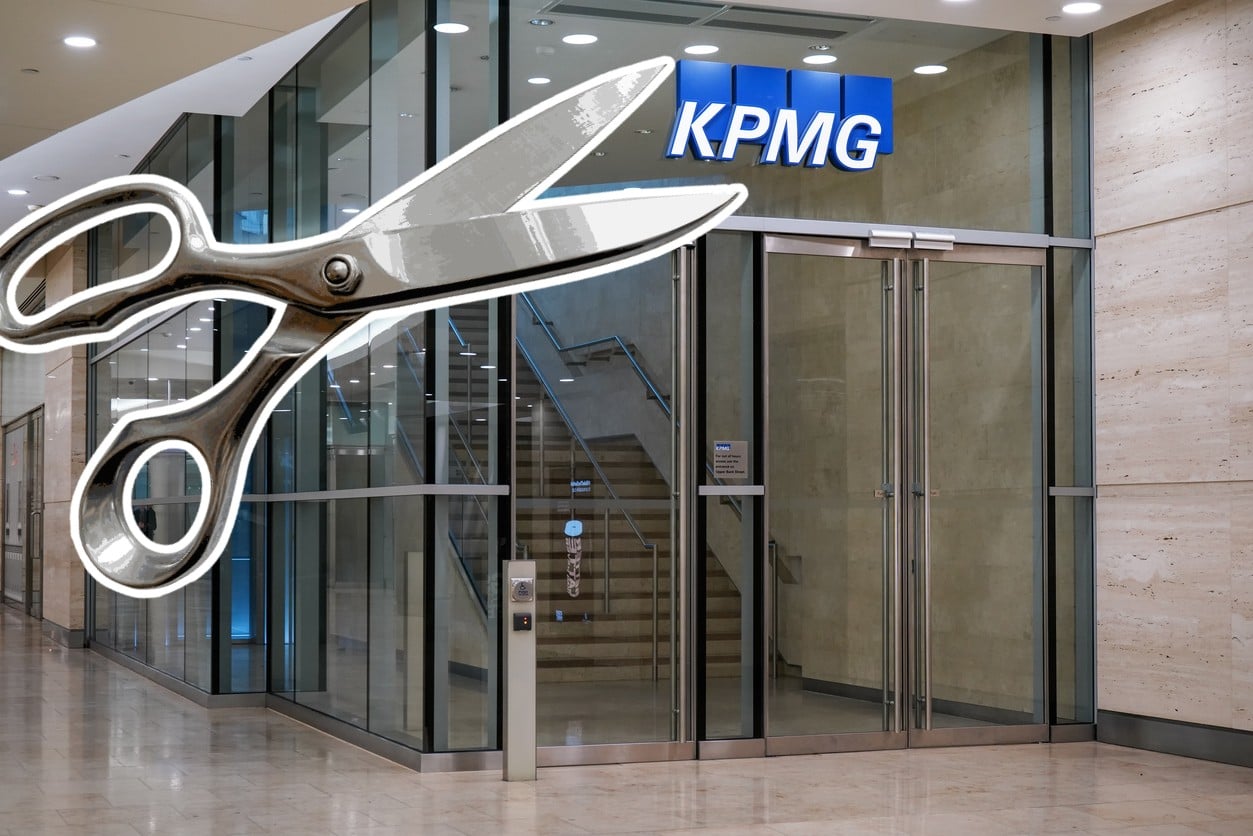
KPMG office exterior with scissors overlay

Layoff Watch ’26: KPMG Cuts 4% From Consulting

We've got another RIF at KPMG, a consulting cull that went down yesterday (that's Wednesday the 29th for those of you reading this a week from now). Let's start with…

Read More
Aerial view of the Pentagon

The Department of War Broke Up with KPMG, KPMG Gives Up Federal Audits Altogether

The other day -- and by the other day we mean like more than a week ago -- we received a text on the tipline that read "KPMG US to…

Read More

News

View All
exterior of PwC building

Evergrande Liquidators Want to Take an Extra Grande Bite Out of PwC’s Whole Pocket

It's already cost PwC China as much as two-thirds of their revenue due to regulatory punishments and reputational fallout, and now the collapse of long-time audit client Evergrande in 2021…

Read More
dog in the sunlight

Monday Morning Accounting News Brief: How About That Entry Level Job Market!; The Failed Client That Could Cost PwC $8 Billion | 5.18.26

Hey, you. Got a little news to get you started on this quiet Monday. In this news briefEY Settles a Matter That's Been Dragging OutThe Failed Client That Could Cost…

Read More
cat relaxing

Friday Footnotes: PCAOB Plans to Take It Easy; Just Ignore Those CP53E Notices, Probably | 5.15.26

Footnotes is a collection of stories from around the accounting profession curated by actual humans and published every Friday at 5pm Eastern. While you're here, subscribe to our newsletter to…

Read More
Exterior EY building

EY Gets Busted and Yeets Cybersecurity Report Littered With AI Hallucinations

Yesterday we received a news release from a communications firm working for a group called GPTZero. Now you should know that we receive probably a hundred or more news releases…

Read More
Grant Thornton building exterior with scissors

Layoff Watch ’26: Grant Thornton Making Some Cuts This Week

As discussed in this Reddit post and in a few tips we've gotten on the tipline received since yesterday, GT US has let some people go this week. How many…

Read More

Technology

View All
Exterior EY building

EY Gets Busted and Yeets Cybersecurity Report Littered With AI Hallucinations

Yesterday we received a news release from a communications firm working for a group called GPTZero. Now you should know that we receive probably a hundred or more news releases…

Read More
illustration of question key, buttons

KPMG Plans to Hand Routine Testing Off to AI

Did you happen to see this WSJ article from the other day? In "In This Critical Part of Audits, the Accountant’s Role Is Shrinking Fast," we're given a look into…

Read More
guy getting a coffee from his AI buddy

AI Will Be EY Auditors’ New BFF, According to EY

While staff in tax at EY US will soon be spending more time with their flesh-based colleagues due to a return-to-office mandate that requires them in the office for an…

Read More
Surprised chihuahua

ICYMI: According to This AI CEO You Won’t Have to Go to Work in a Year

Commence to fantasizing about what you'll do with all that glorious free time when you lose your job to AI in 12-18 months because that's the confident prediction made by…

Read More
a RIP tombstone on a laptop keyboard

Another Early AI Accounting Startup Just Bit the Dust

TIL that early AI accounting platform Botkeeper has died. I found out via this CFO Brew article which pointed to a post on Botkeeper's own site. Turns out r/accounting was…

Read More

Practice Management

View All

Top Remote Tax and Accounting Candidates of the Week | October 16, 2025

Struggling to Find Remote Accounting or Tax Talent? We’ve Got You Covered.If your firm or internal team is having a tough time sourcing qualified remote tax and accounting professionals, you're…

Read More
remote accountants to hire

Top Remote Tax and Accounting Candidates of the Week | October 2, 2025

Struggling to Find Remote Accounting or Tax Talent? We’ve Got You Covered.If your firm or internal team is having a tough time sourcing qualified remote tax and accounting professionals, you're…

Read More

Top Remote Tax and Accounting Candidates of the Week | September 25, 2025

Struggling to Find Remote Accounting or Tax Talent? We’ve Got You Covered.If your firm or internal team is having a tough time sourcing qualified remote tax and accounting professionals, you're…

Read More
tax hiring season

Top Remote Tax and Accounting Candidates of the Week | September 18, 2025

Struggling to Find Remote Accounting or Tax Talent? We’ve Got You Covered.If your firm or internal team is having a tough time sourcing qualified remote tax and accounting professionals, you're…

Read More

Top Remote Tax and Accounting Candidates of the Week | September 4, 2025

Struggling to Find Remote Accounting Talent? We’ve Got You Covered. If your firm or internal team is having a tough time sourcing qualified remote tax and accounting professionals, you're not…

Read More

Get the Accounting News Roundup

* indicates required
We need this to send you the newsletter.

Quick Reads

View All
person counting money at her desk, piles of papers and calculator

Here Are Tax and Audit Salaries at Top 25, Top 300, and Regional Firms

Recruiting firm Brewer Morris has released its 2025 US CPA salary guide and should you want to read the whole thing you can request it from them here. Perhaps you,…

Read More
Guy with a migraine surrounded by work

Friendly Reminder Not to Work Yourself to Death For This Profession

Saw this on the bird app yesterday and thought its message would be worth passing along what with 20 days remaining until April 15 and nerves as strained as ever…

Read More
sorry we're closed sign in business window

Accounting Firm Abruptly Nopes Out of Tax Season Early (UPDATE)

Ed. note: An earlier version of this article's headline stated the sheriff is investigating. The Alexander County Sheriff's Office informed us they are not investigating, only fielding calls from the…

Read More
an office trash can with paper

This Deloitte Office Has Eliminated Trash Cans at Desks to Make Staff Get Up Off Their Asses

Boston Business Journal wrote an article about Deloitte's new office in Boston and for some reason they chose to lead with this: You won’t find trash cans at the desks…

Read More
screenshot of an IRS system outage warning

The IRS Decided to Troll Tax Pros For 10/15

We realize the decision to run maintenance on IRS systems likely isn't made by anyone who understands deadlines but surely someone who does could inform the IT department of these…

Read More

Sponsored Content

View All

Top Remote Accounting Freelancers: February 3, 2024

Looking to staff up for a season or hire a freelancer for a project? Accountingfly is ready to partner with you! Gain full access to a pool of highly skilled…

Read More
men juggling on a plain, black and grey

10 Essential Project Management Principles for Accounting Firms

Every accounting firm struggles with project management, with smaller practices that are rapidly expanding taking the brunt of the damage. As your firm adds new clients, takes on more work,…

Read More
Upset stressed woman holding cellphone disgusted shocked with message she received isolated grey background. Funny looking human face expression emotion feeling reaction life perception body language

6 Ways Email is Secretly Destroying Your Accounting Firm

Email: The word itself sounds innocent, doesn't it? Kind of like "snail mail," but faster, sleeker, and without the slimy trail. But don't be fooled—email is secretly a sinister beast,…

Read More
Pink note on blue walll with text written CAN WE TALK , concept of talk openly to improve relationship, listen and share more, for couples or for teamwork

Don’t Grow Your Accounting Firm Out of Business! Break Up With These Unscalable Practices Now

Business growth is always a high priority for accounting firms, especially small-to-midsize practices. Take care, though, because growth can be a double-edged sword. If your firm expands too quickly or…

Read More

Get the Accounting News Roundup

* indicates required
We need this to send you the newsletter.

Cloudsplitting: Recognizing the Tech and Business Cloud Narratives

Cloud Computing can be an intimidating subject area simply due to the sheer number of articles, blogs, conferences, and information on the matter. My goal in this post is to split the discussion based on the perspective of the writer.

While researching this post on “Cloudsplitting”, I became formally acquainted to the concept of an unreliable narrator:

“a narrator, whether in literature, film, or theatre, whose credibility has been seriously compromised.”

The nature of the narrator may be immediately clear or it may be revealed later in the story. Sometimes it is revealed at the very end, at which point you find out your narrator has been totally unreliable! This makes yo story… which you should…. the guy was unreliable.


I think it’s a great concept! The first example that jumps to mind would be Kevin Spacey’s character in The Usual Suspects (Warning: Swears… Gonzalez sized swears).

I stumbled on the concept, the actual term, thanks to Cloudsplitter, the book. It’s a fictional retelling of Harper’s Ferry from the FICTIONALIZED point of view of John Brown’s son.

The author, Russell Banks, creates new context around the real events through his imagining of what Owen Brown’s views might have been. In this case, John Brown comes off as a lot less crazy than he may have come off otherwise.

(It’s also a hill in upstate NY near Bank’s home – ‘Tahawus‘ is the native Algonquin name for Mt. Marcy – the highest peak in the Adirondacks. It translates to ‘Cloudsplitter.’)

Emotional attachment and years of hermit-like isolation warp the perspective of our fictional version of Owen Brown. Unreliable. Quite frankly, I’ve seen the same in business.

I don’t want to fall for the same mistake.

We’re not hermits holed up in a cabin somewhere living on bottled water and beef jerky.

That’s one of the biggest differences between the introduction of Cloud technology and the introduction of previous computing technology. This time around information abounds. Whereas in the past, information about new technology was carried through very limited channels. And even then, it may have traveled indirect routes.

With our proliferation of information, it’s more important than ever to consider the source of the information. After all, the greatest trick the narrator ever pulled was convincing the world he didn’t exist…. or something.

Be it me and my Cloud Computing story or the guy at your office who waves his arms and decries this “parlour trick” technology.

Where is your information coming from?

I’ll point you to a few resources in a minute that, hopefully, will pass the narrator reliability test. First, if I may, I want to take the opportunity to split Cloud Computing into two separate camps.

In one camp, we’ll have Techie Cloud. In the other, we’ll have Business Cloud.

Techie Cloud:
This is the stuff relating to the functioning of a cloud environment. What’s the architecture? Where’s the data? How do I manage it?

It’s the kind of stuff your Systems Administrators and DBAs and IT Managers would want to know. For instance, I want to play around with Amazon Web Services to create a new computing environment. Do I need any special tools to work there?

Yes, there’s a front-end tool called Rightscale that makes creating a computing environment easy.

While interesting from an academic perspective, your average business user will probably get limited value from seeking out tonnes of information about Techie Cloud. Recognize it when you see it.

Business Cloud:
This is the stuff relating to using cloud-based software. The business user who is looking for a “consumerized” web experience. What does it do? Is it easy to learn? What’s the cost? How do I sign up?

It’s the kind of stuff the accountants, marketers, and salespeople would want to know. For instance, I want to find a way to manage my team’s projects. Can I get going with something quickly?

Yes, try Basecamp.

And Business Cloud is separate from the business of cloud which we’ll get into later.

The reason I am going around Cloudsplitting is because the content I’ve been finding lately doesn’t discriminate with respect to audience. You are as likely to jump into an article that’s geared toward IT as you are to find an article for a Business User’s perspective.

Forward the Techie Cloud articles on to your IT departments. There’s a view out there that Cloud is going to make IT deparments obsolete. I disagree. I think Cloud will free up IT from the mundane custodial services of server maintenance becoming a more strategic partner with management. I’ve written before about accountants being the dishwashers of business. We’re the dishwashers and IT are the custodians (or janitors if you want to be unkind about it).

And remember:

Evaluate the reliability of the source. Evaluate for audience.

Techie Cloud

8 Tips for Getting Started in Cloud Computing (by Rackspace)

What Does the Future Hold for IT? (Bloomberg)

Cloudcamp – formed to provide a common ground for the introduction and advancement of cloud computing

Business Cloud

ICPA Trusted Business Solutions (CPA2Biz) – all of these are Saas offerings

Tourist in Techie Land: Reporting from Cloudcamp Vancouver (me)

IBM CTO at Interop: Consumerization of IT is a Driving Force (ZDNet)

Geoff Devereux works in a marketing/social media role with Indicee, a Saas Business Intelligence company, bringing B.I. to mere mortals. You can see more of his posts for GC here. H/t to Jesse from Cloudsplitter Mountain Guides for the translation and Greg_Smith for the pic.

Job of the Day: Jefferson Wells Needs a Tax Fund Accountant

Jefferson Wells is looking for tax fund accountants to join its New York office. The position will have a number of responsibilities including preparation of corporate and partnership returns including those for hedge funds, private equity funds, real estate funds and investment advisors.

The position requires a minimum of nine years experience, including multi-national tax experience and a broad understanding of technical tax issues. CPA or EA certifications are preferred.


Company: Jefferson Wells

Title: Tax Fund Accountant

Compensation: 80,000-150,000

Location: New York, NY

Responsibilities: Prepare tax returns for S corporations, C corporations, and partnerships; Preparation of accounting records, and financial statements and tax returns for several investment partnerships; Reviewing and preparing yearly tax filings for Hedge Fund, Private Equity Funds, Real Estate Funds, and Funds’ general partners and investment managers; Performing security analysis and calculating various Fund tax adjustments; Preparation of Tax Form 1065 income tax returns and related K-1s and supporting schedules; prior experience with form 1120; Recording all accounting transactions of the fund and ensuring all investments are booked accurately; Preparation of limited partner capital calls and capital distributions; Researching tax treatment of complex financial instruments and corporate actions of Funds.

Qualifications/Skills: Experience with CorpTax software is required; Bachelor’s degree in relevant subject area required (accounting, auditing, information technology, sciences, taxation, finance etc.); Minimum nine years applicable experience in tax required (federal, state and local or international tax); Experience with multi-national corporate taxation preferred; Broad understanding of tax technical areas and a strong familiarity of FAS 109 preferred; CPA, MST, Enrolled Agent (EA) or Project Management (PMI) certifications preferred.

See the entire description over at the GC Career Center and visit the main page for all your job search needs.

Pros and Cons of the CFO Serving on the Board of Directors

This story is republished from CFOZone, where you’ll find news, analysis and professional networking tools for finance executives.

While shareholders and Sarbanes-Oxley demand more independent directors on boards, a new study shows companies with boards that have at least one key insider, the CFO, are better at financial reporting than those without that executive on their boards. But that doesn’t necessarily mean that all companies should appoint their CFOs to their boards, not at least without taking other considerations seriously into account. In fact, most companies probablelsewhere for the expertise that CFOs supply.


The study found that companies with CFOs on their boards have more effective internal controls over financial reporting, higher accrual quality and a lower likelihood of restatements.

The study measured the quality of financial reporting by examining the incidence of material weaknesses reported under Section 404 of Sarbanes-Oxley. The provisions require companies to document and test internal control over financial reporting, and the company’s independent auditor to independently test those controls and opine on internal control effectiveness.

“One overarching benefit we saw was that there was an improvement in financial reporting when a CFO was on the board,” Rani Hoitash, a professor in the department of accountancy at Bentley University and co-author along with professors Jean Bedard of Bentley and Udi Hoitash, of Northeastern University, “Chief Financial Officers on Their Company’s Board of Directors: An Examination of Financial Reporting Quality and Entrenchment,” told CFOZone.

From 2004 to 2007, 12 percent of those with a CFO on the board reported problems with their internal controls, compared with 15 percent of those without their CFOs on the board, according to the study. Companies with their CFOs on their boards were also 15 percent less likely to restate their results.

These results imply that having a CFO on the board is more likely to align management’s interests with those of shareholders. One reason, the study says, is that CFOs are more likely to share information with other board members about the status of the financial reporting function, and secure sufficient resources to invest in the establishment, documentation and testing of internal controls.

Yet only 8 percent of the more than 7,000 companies studied had their own CFOs on the board.

Of course, SarBox says a CFO can’t serve on his or her company’s audit committee because of the obvious conflict of interest. But as Hoitash points out, “they can have input.”

And SarBox also requires a board to have financial expertise. A CFO obviously fits that bill.

But having a CFO on the board is not without its drawbacks. CFOs serving on boards are more highly compensated than those in other companies, earning an average of $218,715, or 34 percent more in total compensation than their nondirector peers did. There was also a 35 percent lower turnover rate, 8.2 percent compared to 12.7 percent, among CFOs who sat on their own companies’ boards, an advantage that sometimes existed despite a decline in earnings. Hoitash said the findings were evidence that CFOs who serve on boards are more firmly entrenched than those who are not.

That can be a good or bad, depending on a company’s performance. While in many cases where companies are performing poorly, they will fire the CFO without addressing the underlying causes, Hoitash noted that the opposite is true in cases where the CFO is on the board, and that’s obviously not a good thing either. “If the CFO is on the board and the company is performing poorly we found that they sometimes don’t leave, because they have power and influence,” he said.

The question is, will they use the power to do good or bad?” asked Hoitash. If they see themselves as part of the board and work to achieve goals, that is clearly a good thing. However, that power could also be used in their interest to the detriment of shareholders.

That makes some observers wary of appointing CFOs to boards. Instead, say these observers, they should merely attend all board meetings so as to share their expertise without becoming entrenched. “Look back in history, what transgressions brought us to Sarbanes-Oxley and other regulatory reforms?” asked Marc Palker, a certified management accountant and director of CFO Consulting Partners. “Once the CFO was granted stock options in the same manner as the CEO, there was a possible partnership for crime,” Palker added.

Others go even further by recommending that CFOs not attend meetings devoted to discussions of the company’s finance functions. In that case, “it might be appropriate to hold them without the CFO present,” said Sue Mills, a consultant with Tatum, an executive services firm that provides interim CFOs.

Bottom line: CFOs don’t belong on boards unless they cannot otherwise get financial expertise. In that case, Hoitash said, “you might want” to consider the idea.

Survey: CFOs Don’t Think You Should Start Your Career at a Big 4 Firm

Accountemps released the results of a survey today that shows many Chief Financial Officers think that the best place for accounting graduates to start their careers is in a “small to midsize company.” The surprising thing about this particular survey is that the numbers aren’t even close.

When CFOs were asked, “In which one of the following employment environments would you recommend today’s accounting graduates begin their careers?” Their responses were:

Small to midsize company 56%
Small to midsize public accounting firm 16%
Large corporation 14%
Large public accounting firm 8%
Other/don’t know 6%


“Small to midsize public accounting firm” dropped 14% from 2005.

Oh right. And “large public accounting firm” came in dead last. So, for the CFOs surveyed, they’re not really hot on public accounting like they were five years ago and they’re really not crazy about the Big 4 and next tier firms.

Accountemps Chairman Max Messmer says, “At smaller companies, employees often must wear many hats because workloads are spread between fewer workers. Having a wider range of duties enables new hires to quickly build skills, gain exposure to diverse areas of the business and assume strategic roles earlier in their careers.”

From a personal standpoint, we’ve seen both the small and the freakishly large so we’ll try to provide some perspective here.

Maximilian’s thoughts are accurate as it relates to smaller companies. They do have more of a sink or you’re out on your ass approach that will help you grow up quick in that company. Additionally, small businesses have the tendency to be a little more flexible when it comes to your work/life balance. There aren’t any fancy initiatives or bombardments of emails; it’s more of the behavior of those around you. In small companies, you see people taking vacation for days and weeks at at time. That should encourage you to do the same.

At large companies, you hear about people that are losing their accrued vacation, mostly because they are lunatics, but also because it’s likely a widespread occurrence at the company. People in large firms have the asinine notion that somehow the wheels would fall off if they were to disappear for two days, forget about a week. This sounds ridiculous but it’s true.

However, large firms and companies do have resources and opportunities that smaller shops simply cannot provide. Want to move to San Francisco? Your large firm has an office there. Think you might want to spend two years in Australia? Your large company can make that happen. Small shops? Not so much.

What the press release doesn’t say is why the CFOs think you should start at a small/midsize company. Max’s opinion is fine but did he conduct all 1,400 of those phone interviews himself? Of course not. The survey was “a random sample of [CFOs at] U.S. companies with 20 or more employees.” Chances are, most of those CFOs have never worked at a big company so their perspective is likely skewed.

The other thing is – trying not to overstate this – you’ve got to make up your own damn mind about what you want to do with yourself. Do you want Big 4 experience? Then go for it. Do you want a flexible schedule that doesn’t involve a multi-level bureaucracy? Then a small company is probably more your speed.

No survey can answer those questions for you.

THINK SMALL: CFOs Recommend Accounting Grads Start Their Careers at Smaller Companies [Accountemps PR]

One Diligent CPA Forced the IRS to Use a ‘Staggering’ Amount of Resources

Sure, NYU has produced lots of fancy-pants tax lawyers. And many high-powered big-school tax accountants haunt the cubicles of the Final Four accounting firms. But if driving the IRS to distraction is a mark of tax distinction, an obscure Kansas City attorney/CPA, formerly of Grant Thornton and Coopers and Lybrand, is a true tax all-star.


Or was. A federal judge this week made it inconvenient for GT alum Allen R. Davison to pursue his tax practice by enjoining him from marketing some of his most creative ideas:

Davison is hereby enjoined from organizing, establishing, promoting, selling, offering for sale or helping to organize, establish, promote, se any tax plan, as addressed herein, involving sham parallel C management companies, sham 412(i) plans, sham flock contracts or any other illegal tax scheme, plan, or device, even if not specifically addressed herein. Additionally, Davison shall not organize, establish, promote, sell, offer for sale or assist in any financial or tax related arrangement without submitting in writing to an IRS designee, a detailed plan explaining the financial or tax arrangement and all steps necessary for the arrangement to be legal under the tax code.

That would all be rather inconvenient for a practitioner. Why are the feds so down on Mr. Davison? From the injunction order:

Davison’s numerous, complex, ever-changing, tax-fraud schemes and his deliberate efforts to disguise his true involvement in the promotion of these tax-fraud schemes have required the IRS to expend a “staggering” amount of resources on discovering and combating these schemes. If this outlay of resources continues – and it almost certainly will continue in the absence of an injunction barring Davison from offering tax advice without significant restraint, then these resources will not be available to service honest tax paying Americans. Nor will these resources be available to investigate other promoters of tax-fraud schemes.

What were these “schemes”? Some of them used “management fees” to shift income from taxable businesses to sham S corporations owned by tax-exempt ESOPs or Roth IRAs. Others involved improper pension plans. But good old Midwestern farm ingenuity was behind what may be his most creative plan:

Davison drafts purported flock contracts for his clients. (Tr. 398:21-399:4). He argues that by executing these agreements, his clients become farmers, who are eligible to claim deductions for the cost of purchasing a flock of layer hens during the tax year in which that cost is incurred, pursuant to Revenue Ruling 60-191. (Tr. 412:10-20; PX 165). That revenue ruling provides “that farmers employing the cash method of accounting may deduct the cost of baby chicks and egg laying hens in the year of payment therefor, provided such method is consistently followed and clearly reflects income.”

The judge found that Mr. Davison has an overly-inclusive view of what “farming” means. The judge said that a guy with dirty boots who actually fed and raised chicks might be a farmer, but a “self-employed insurance salesman,” for example, who loaned money to a real farmer, did not.

There are many fascinating threads here, but let’s just hit three for now:

• Mr. Davison began selling many of these ideas while working for Grant Thornton, and according to the court order, marketed them through a network of CPA firms set up by GT alums. Networking pays!

• The elaborate system of preparer registration, testing and continuing education that IRS Commissioner Shulman is ramming through will spend enormous resources making honest and competent preparers jump through hoops; they would have done nothing to stop Mr. Davison. Shulman’s plan will spend money on driving honest preparers crazy with paperwork rather than chasing scammers.

• The cash-basis chicken flock technique that is outrageous for an insurance salesman is hunky-dory when done by a wealthy farmer. Because America Needs Farmers!

Joe Kristan is a shareholder of Roth & Company, P.C. in Des Moines, Iowa, author of the Tax Update Blog and Going Concern contributor. You can see all of his posts for GC here.

Accounting News Roundup: PwC Has an Iceland Problem; Chief Audit Execs as the Bad News Messengers; Would IFRS Result in More Shareholder Litigation? | 05.13.10

How Dangerous is the Two-Billion Dollar Suit Against PwC Over Iceland’s Glitnir Bank? The Answer is Blowin’ in the Wind [Re: Balance]
In terms of a European financial laughingstock, prior to Greece, there was Iceland. Glitnir Bank (or what’s left of it) is suing its former chairman, CEO, other directors, and PricewaterhouseCoopers for their implosion last year.

For PwC’s part, one might think that since the lawsuit is in a country no one really pays much attention to, that it’s a bit of a joke. Well, that would not be so:

PwC faces a real lawsuit (for the complaint, here), in a real court – Manhattan’s New York Supreme – brought on behalf of the bank’s creditors and advised by Steptoe & Johnson and Slaughter & May – real lawyers who know their billions from their millions. Nor, any more than any of the other Big Four accounting firms, does PwC have the resources to absorb a ten-figure litigation blow (here).

Prosecutors Ask if 8 Banks Duped Rating Agencies [NYT]
Goldman Sachs, Morgan Stanley, UBS, Citigroup, Credit Suisse, Deutsche Bank, Crédit Agricole and Merrill Lynch come on down!

When the CAE is the bearer of bad news – and gets shot in the process [Marks on Governance]
What’s that saying about messengers? Chief Audit Executives (“CAE”) are often bad news messengers and talk about a thankless job. As Norman Marks tells us about one person that shared with three tricky situations with past employers:

In each of these situations I firmly believed that something that the organization was doing was highly unethical and/or not in the best interest of the organization, placing it at risk. Two of the organizations actually admitted that what was being done was in direct violation of the organization’s policies and in one situation state employment laws. In one situation I had my exit meeting with HR, and in the other two organizations only with the CAE.

In case you’ve misremembered, whistleblowers usually have a rough go of it, as Norman states, “All CAEs recognize that this is a risk, and in my experience they all accept it with full knowledge that their career at their company may effectively end with the delivery of the bad news.”

GAAP’s Lawsuit Buffer [CFO]
Some might argue that U.S. GAAP has a very distinct advantage over a more principles-based accounting system – lower litigation risk.

Of course companies could document the hell out of their “principles-based” conclusions to mitigate this risk but shareholders would likely still question their cockamamie reasoning. Now a recent study entitled “Rules-Based Accounting Standards and Litigation” is suggesting “that companies that violate rules-based standards have a lower likelihood of getting sued than those that are accused of violating more-principles-based standards,” giving the pro-U.S. GAAP contingent more to stand on.

The authors did admit that it’s difficult to conclude that principles-based would absolutely, 100% lead to more litigation due to our “unique litigation system” and the fact that we live in a sue-happy paradise.

The BNY Mellon CFO Isn’t Mad at Andrew Cuomo…

…just disappointed about Andy getting all sue-y over BNY Mellon’s Ivy Asset Management’s involvement with Berns Madoff, which will result in more money going to – SHOCK – lawyers.

Bank of New York Mellon Corp.’s (BK) Chief Financial Officer Todd Gibbons told investors Wednesday that the company is “a bit disappointed” about the New York Attorney General’s decision to file a law suit against the bank related to Bernard Madoff’s Ponzi-scheme.

But as a result of the suit, and the current environment more broadly, legal cost are expected to run higher, the CFO said at UBS AG’s (UBS) Global Financial Services Conference in New York.

Joe Francis Can’t Land an Attorney Thanks to the IRS, Says Joe Francis

Douche of the Last Decade Joe Francis is having trouble finding a lawyer in North Florida. No, it’s not due to his all around doucheness. And no, it’s not due to his inability to pay his previous attorney, Rick Bateman (who is suing him) $500k. It’s because he claims that the IRS has slapped levies on his hard earned drunk topless girl fortune.


A judge is set to enter a default judgment against J Fran for in a case where four women are suing him for taping them while they were underage. Since Fran can’t find counsel, he had to personally write a motion to request Judge Richard Smoak for leniency.


This is interesting not only because we didn’t know Joe could write but also because we thought the IRS had given up on old Joe after it was reported that his $30 million+ lien was reportedly dropped:

“My efforts to obtain new counsel have been hampered by levies upon my companies’ financial accounts by the Internal Revenue Service,” Francis wrote. “Prospective counsel that have agreed to entertain engagement as counsel in the case require large retainers which could not be facilitated in the time permitted by this Court’s Order of March 12, 2010.”

Joe is confident he’ll bag some representation before the June 10 deadline, saying that barring “unforeseen developments” (i.e. douchiness) he’ll no longer be forced to write words.

Joe Francis blames IRS for attorney-finding troubles [Panama City News Herald]

What To Do When You’re Ready to Quit Public Accounting

What to do, what to do.

As summer promo’s and raises (or lack thereof) loom on the horizon, you may or may not be on the hunt for a new job. If you are, great, keep reading. If you’re not that’s swell too but I encourage you to use this as a reference when the time comes. What I do want to talk about is how to resign from a job. Because if I’ve seen anything on my side of the HR table, it’s that you accountants can be rough around the edges come Hugh Grant time.


Listen, I don’t know what your recruiters tell you, but here’s what you need to know:

Respect your colleagues and boss – So you get the call you’ve been working towards – XYZ Company wants to hire you. Offer is for better money, hours, and potential. You’re on board. Great – now what?

When you’re done with your victory dance in the parking lot, the people you should break the news to is your engagement team. After all, they are the ones that will be forced to immediately absorb your departure. You shared long hours and an infinite number of other unfortunate circumstances and the whole “in the trenches” camaraderie is flushed away with your decision to leave. The best way to explain this situation to them is to be honest – you’re moving on to a better situation and you’re sorry that this puts more work on their plate but it’s not personal.

Spread the word to your mentor and mentees. It is vital to protect these professionally personal relationships. Chances are your mentors know why you’re leaving; hell, they might have even encouraged you to look outside the firm. Include them on your final “farewell” email, but be sure to contact them on a personal level as well. Thank them for their help in shaping your career.

Your resignation letter should be short and sweet. Keep the feelings, personal jabs, and wisecracks out of the email. Here’s an example:

Dear Caleb Newquist,

As of today, (May 12, 2010) I am officially notifying you of my resignation. I am prepared to work for two weeks from this date, ending on (May 26, 2010). I will do whatever it takes from today until that date to make my departure as smooth as possible.

I sincerely hope to continue the professional, and more importantly personal, relationships I have developed in my time at ABC. I hope that this parting can be accomplished without hurting said relationships.

If you have any questions, please do not hesitate to ask.

Sincerely,

Daniel Braddock

Short and sweet. Should you have the need to express personal messages to TPTB, do so in a separate email. Your resignation letter is nothing more than a means to an end.

Whatever you do, don’t burn the bridges – The accounting world is smaller than you might think. Chances are when you leave your current firm you will consider a number of your former colleagues to be current friends. Keep your farewell email short and genuine, but also professional. Whatever you do, don’t burn bridges now. You have no idea when the next happy hour will turn into a professional opportunity.

Promotion Watch ’10: KPMG Announcing New Managers This Week?

While the timing seems early (Klynveld is on a 9/30 FYE), there has been a lot of chatter about the announcement of this year’s class of new managers happening this week.

From a Tim Flynn foot soldier close to the situation:

Heard on Monday that national was supposed to communicate yesterday or today, with communication to us this week.


And as you might imagine, there is some anxiety out there:

I’ll tell you one thing, the SA3s that don’t get promoted, they better get a ridiculous compensation package at the time they tell us we’re getting fucked. Otherwise, we’re all leaving. Two years in a row taking it up the ass from Uncle Peat? No thank you.

That’s the word from an office in the western region. Back east, there seems to be less concern:

DC already [announced], or everyone already knows, at least. Anyone with the requisite number of years and their CPA was promoted but DC has been bleeding employees lately. Everyone’s quitting or going on rotation at the senior and manager levels. Mostly quitting.

And what about those SA3s that don’t get the bump because A) they aren’t particularly popular or B) don’t have their CPA? Turns out KPMG is prepared for that. We’ve learned that the firm is offering a new training this summer specifically for SA4s. Soooo, we imagine that training could have some discussions that goes like this:

SA4 #1: Skipped over?

SA4 #2: Failed FAR three times. You?

SA4 #1: Was told that I’m “not quite ready” (hand quotes, eye roll) and that the 4th year will better prepare me for manager.

SA4 #2: Sucks.

SA4 #1: Sucks.

Keep us posted if you get the yay or nay in your office.

UPDATE: To answer a question in the comments, this is for the audit side of the house. If you’re tax or advisory feel free to weigh in on your own promotion possibilities.