

Yesterday we received a news release from a communications firm working for a group called GPTZero. Now you should know that we receive probably a hundred or more news releases every week and most are garbage but this one stood out immediately by the subject line alone: EY report was 72% AI-generated, investigation reveals.
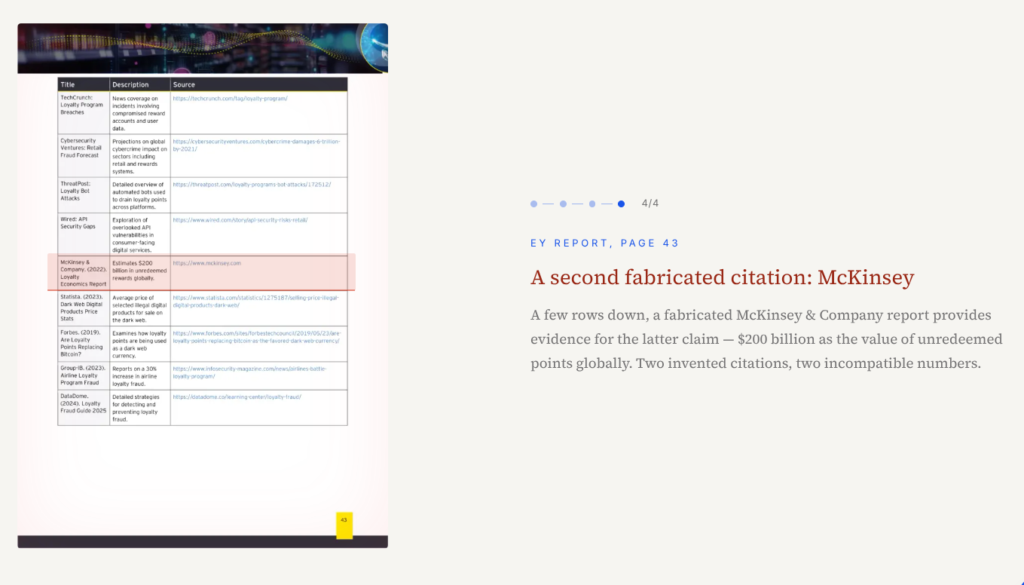
The investigation found that the 2025 EY Canada report titled “Points of Attack: Uncovering Cyber Threats and Fraud in Loyalty Systems” was stuffed with hallucinations: 16 out of 27 citations to be exact. “While credited to three employees, including two partners and a senior manager, the report is a collage of misattributions, inaccurate statistics, and AI-written text,” said the email we got. “For example, research citations to Forbes, McKinsey, Gartner, TechCrunch and WIRED were either broken URLs or never existed in the first place.”
In a blog post, GPTZero explains their process:
EY Canada’s report doesn’t use footnotes or normal academic citations. Instead, it references sources directly in the text and/or includes them in a resources table (p. 41-43). This table provides a source title, description, and URL for all sources, as well as the publisher and date in certain cases. Almost all of the URLs are broken or fake, and more than half of the titles don’t correspond to real sources.
GPTZero uses a very specific definition of vibe citation because of the potential reputational cost (to both us and the report’s authors) of false positives. One of our team members manually verified Hallucination Check’s results to ensure their accuracy.
And includes specific references:
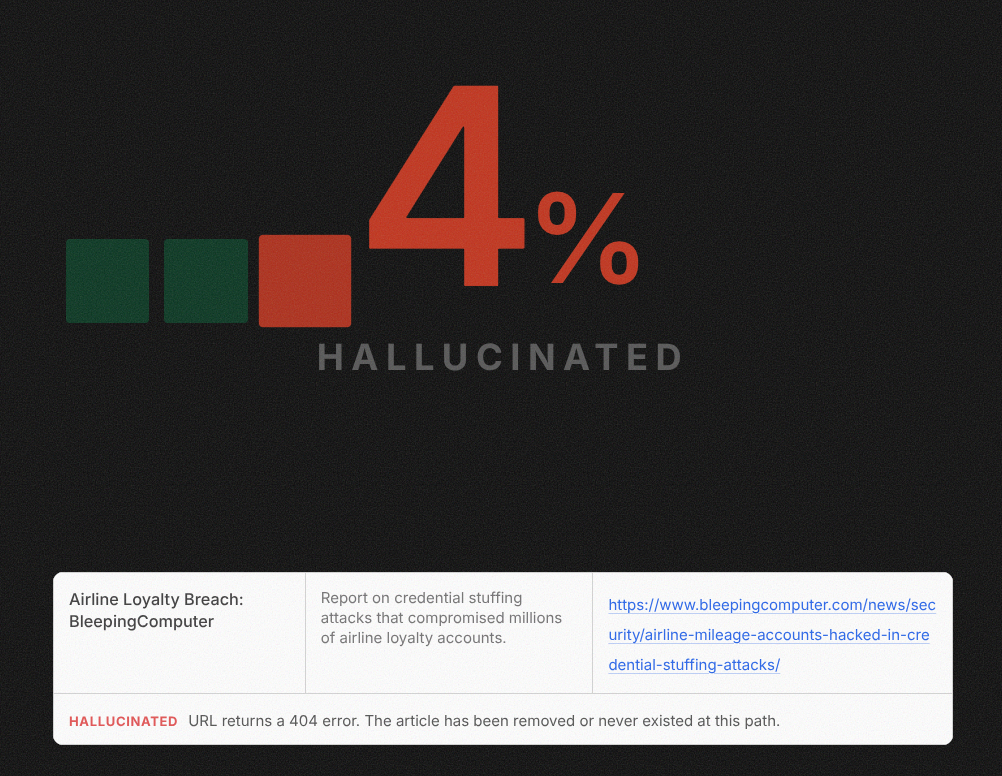
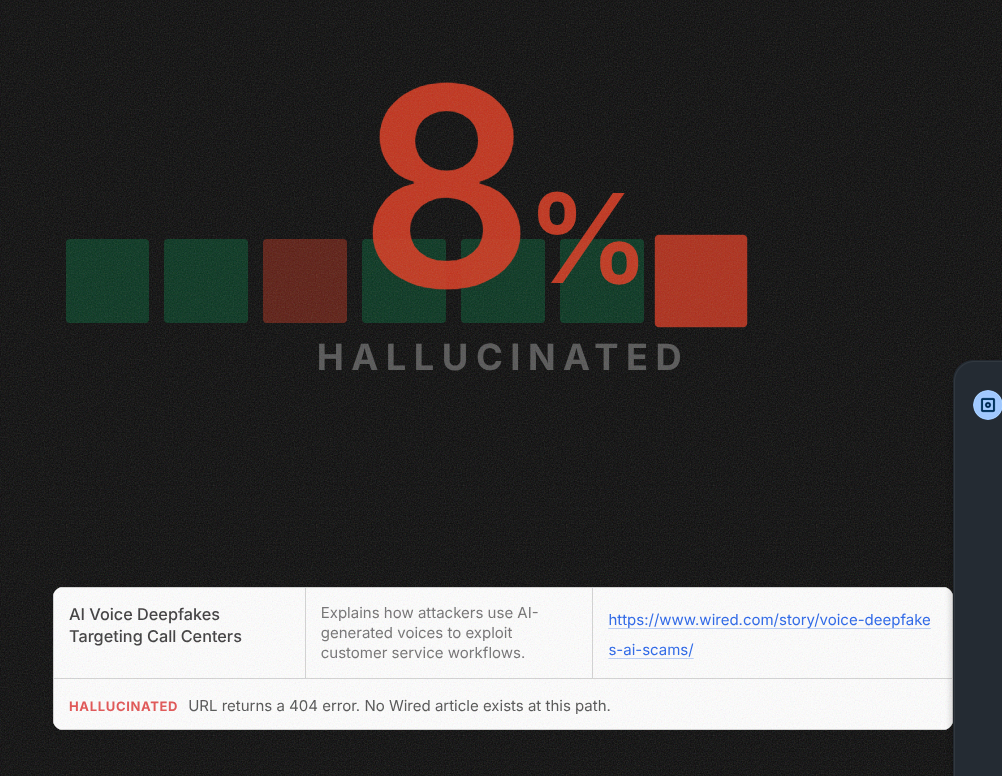
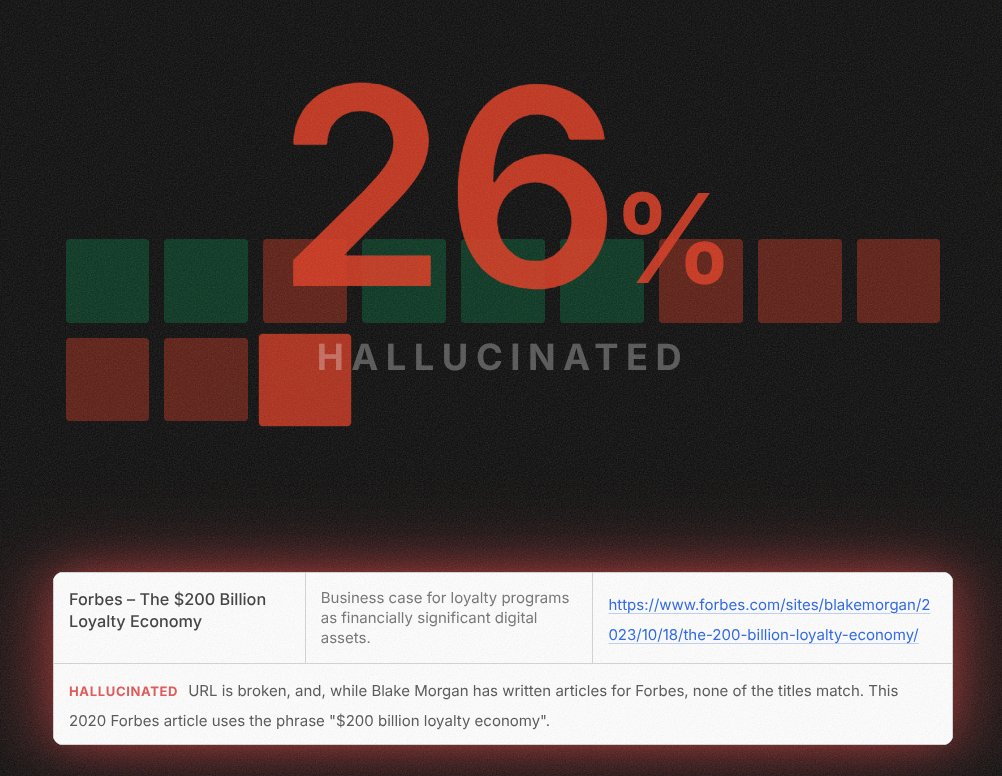
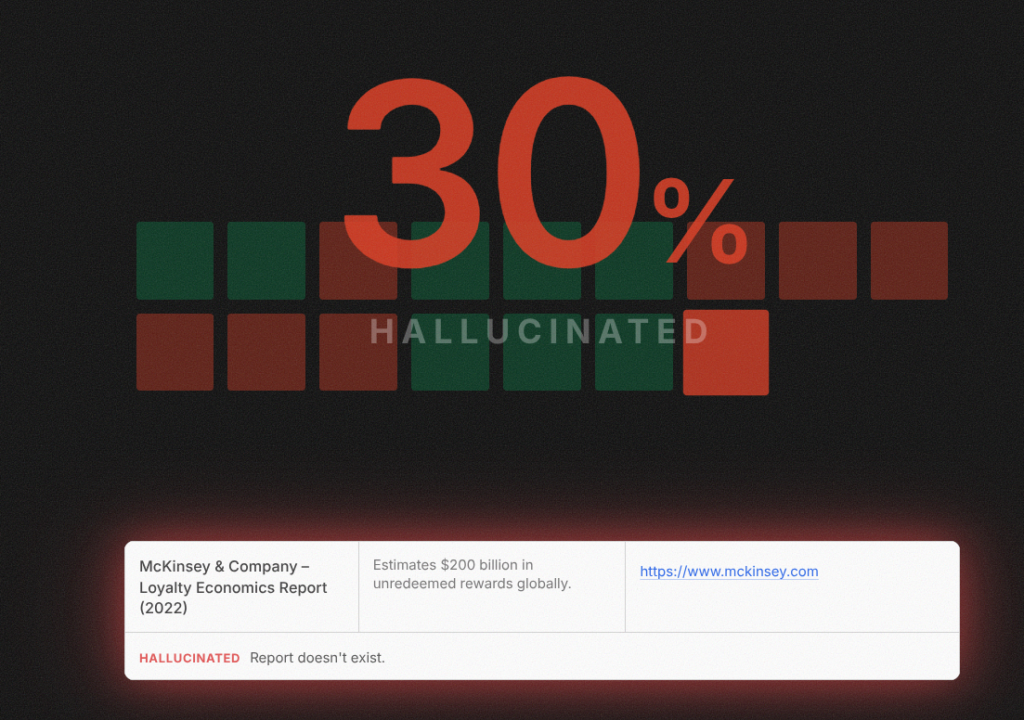
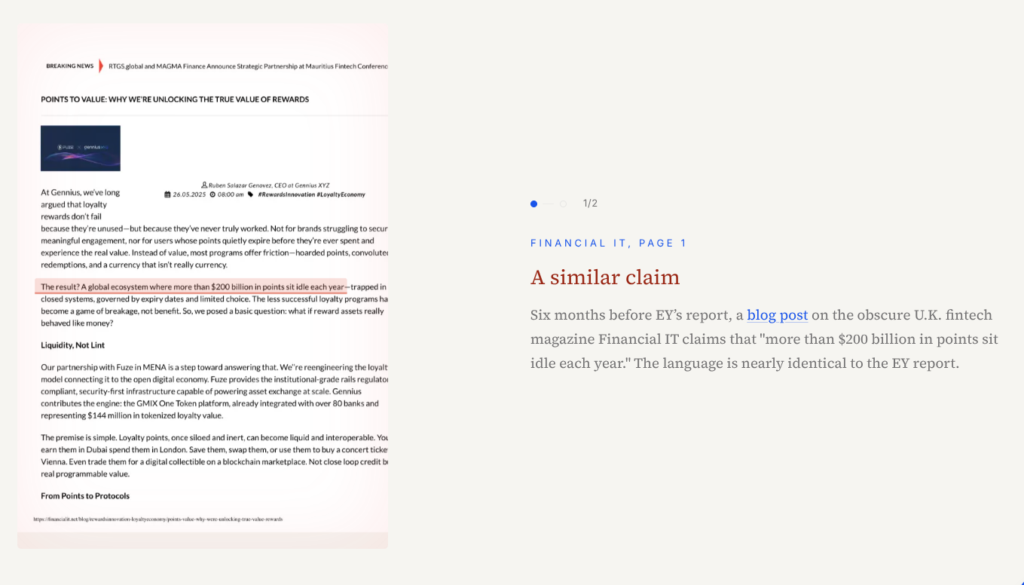
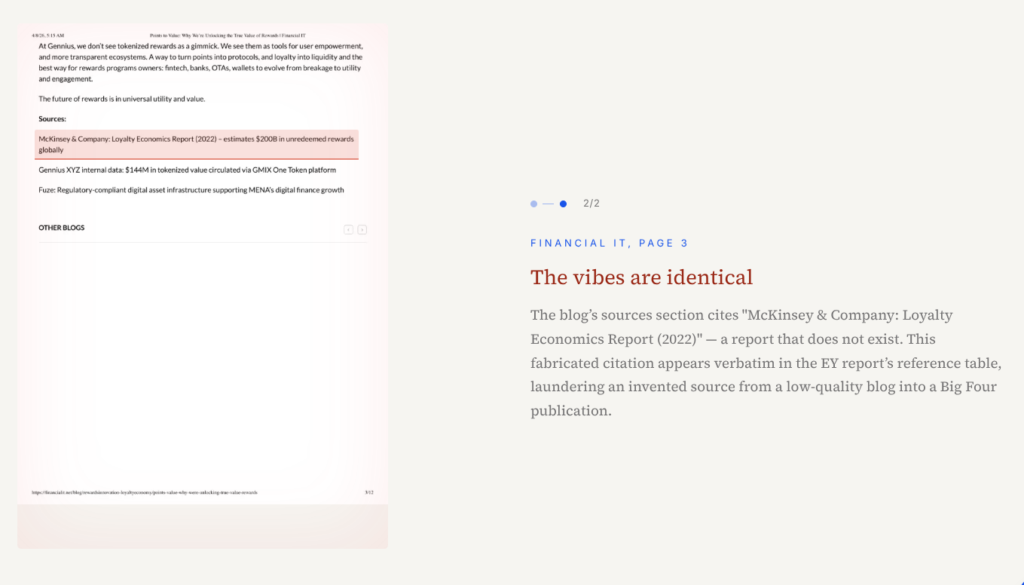
In one instance, GPTZero researchers tracked down the source of the McKinsey citation to a single “low quality” blog:
We planned to download the EY report and do some independent checking of our own for the purposes of this article before publication but by the time we got around to it, EY’s report had been removed from their website and Financial Times had covered it: EY retracts study after researchers discover AI hallucinations.
Wrote FT:
EY said it had removed the loyalty scheme report from its website and was “reviewing the circumstances that led to this article’s publication”, adding the study was not connected to work for any EY client.
“EY Canada takes the accuracy of all the content we publish seriously and we have an organisation-wide commitment to the responsible use of AI,” EY said.
Oof. How many times does this have to happen before firms stop trusting AI to spit out info?
Chasing the Hallucinations [GPTZero investigation]

when will accountants quit trusting ChatGPT? When the lawyers quit trusting GPT. LOL