Careers

View All

Big 4

View All
illustration collage of stressed woman at work

Apparently Shouting “Promote Me! Promote Me!” in a Partner’s Face Can Get You Promoted at Deloitte

Over in Ireland there's a case before the Workplace Relations Commission (WRC) right now that may be of interest to our readers, our readers being people who are all too…

Read More
guy getting a coffee from his AI buddy

AI Will Be EY Auditors’ New BFF, According to EY

While staff in tax at EY US will soon be spending more time with their flesh-based colleagues due to a return-to-office mandate that requires them in the office for an…

Read More
1st place trophy being held up

Once Again, a Mid-Tier Firm Beat Out Big 4 on This ‘Best Companies’ List

Fortune has released its Best Companies to Work For list for 2026 and we just realized we didn't cover it at all last year. Shrug, it's all just marketing anyway.…

Read More
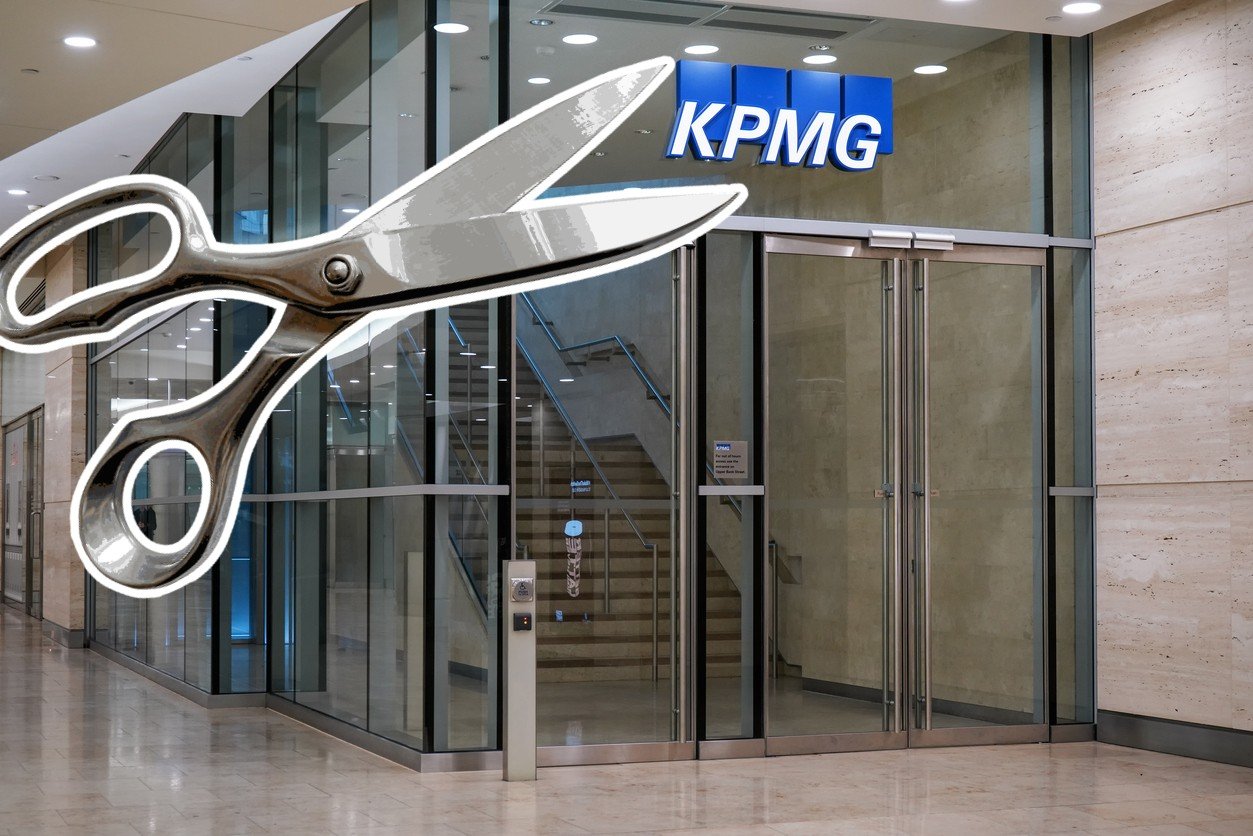
KPMG building exterior with scissors overlay

Layoff Watch ’26: The King’s KPMG Kindly Asks 600 Auditors to GTFO

We covered this story in yesterday's Monday Morning Accounting News Brief but it's significant enough news to earn its own spot in a separate article as it's a large market…

Read More
Clenched fist

A KPMG Senior Director Got Beat Up By a Guy Who Stars in Reacher

Oh my God it feels like it's 2010 all over again with that headline. Thanks to the algorithm for putting this item in my feed since no one saw fit…

Read More

News

View All
illustration collage of stressed woman at work

Apparently Shouting “Promote Me! Promote Me!” in a Partner’s Face Can Get You Promoted at Deloitte

Over in Ireland there's a case before the Workplace Relations Commission (WRC) right now that may be of interest to our readers, our readers being people who are all too…

Read More
smiling cat in a patch of sun

Monday Morning Accounting News Brief: You Can’t Spell Audit Without AI; An Elaborate Scheme to Defraud the Air Force | 4.6.26

Hey. To our readers in tax let me just say you're doing great! Almost there! For everyone else, hopefully you're hanging in there as well. To everyone: be sure to…

Read More
puppies in a basket

Friday Footnotes: EY Tells Tax to Get Back in the Office; Associates Are Vibe Coding Now | 4.3.26

Footnotes is a collection of stories from around the accounting profession curated by actual humans and published every Friday at 5pm Eastern. While you're here, subscribe to our newsletter to…

Read More
KPMG building exterior with scissors overlay

Layoff Watch ’26: The King’s KPMG Kindly Asks 600 Auditors to GTFO

We covered this story in yesterday's Monday Morning Accounting News Brief but it's significant enough news to earn its own spot in a separate article as it's a large market…

Read More
orange and white cat on balcony with daffodil

Monday Morning Accounting News Brief: KPMG Asks Hundreds of People to Go; One Big Beautiful Bill Equals Billable Hours | 3.30.26

Good morning and happy Monday, capital markets servants. I ventured out into the muck to dig up some news for you to start the week. In this news briefYour Services…

Read More

Technology

View All
guy getting a coffee from his AI buddy

AI Will Be EY Auditors’ New BFF, According to EY

While staff in tax at EY US will soon be spending more time with their flesh-based colleagues due to a return-to-office mandate that requires them in the office for an…

Read More
Surprised chihuahua

ICYMI: According to This AI CEO You Won’t Have to Go to Work in a Year

Commence to fantasizing about what you'll do with all that glorious free time when you lose your job to AI in 12-18 months because that's the confident prediction made by…

Read More
a RIP tombstone on a laptop keyboard

Another Early AI Accounting Startup Just Bit the Dust

TIL that early AI accounting platform Botkeeper has died. I found out via this CFO Brew article which pointed to a post on Botkeeper's own site. Turns out r/accounting was…

Read More
KPMG exterior building with sign, inverted

KPMG Brings Cheating Into the AI Age By Using AI to Cheat on AI Exams

The image is upside down because Australia. This story sounds like a joke but we assure you it is not. KPMG Australia has expanded KPMG's storied cheating repertoire by being…

Read More
KPMG building exterior with discount sale signs

KPMG Brings AI Talking Points to a Fee Negotiation, Inadvertently Opens a Pandora’s Box Filled With Stingy Clients

As reported by Financial Times on February 6, included in Friday's edition of Footnotes, and widely chuckled at by public accountants both current and former across the world since, KPMG…

Read More

Practice Management

View All

Top Remote Tax and Accounting Candidates of the Week | October 16, 2025

Struggling to Find Remote Accounting or Tax Talent? We’ve Got You Covered.If your firm or internal team is having a tough time sourcing qualified remote tax and accounting professionals, you're…

Read More
remote accountants to hire

Top Remote Tax and Accounting Candidates of the Week | October 2, 2025

Struggling to Find Remote Accounting or Tax Talent? We’ve Got You Covered.If your firm or internal team is having a tough time sourcing qualified remote tax and accounting professionals, you're…

Read More

Top Remote Tax and Accounting Candidates of the Week | September 25, 2025

Struggling to Find Remote Accounting or Tax Talent? We’ve Got You Covered.If your firm or internal team is having a tough time sourcing qualified remote tax and accounting professionals, you're…

Read More
tax hiring season

Top Remote Tax and Accounting Candidates of the Week | September 18, 2025

Struggling to Find Remote Accounting or Tax Talent? We’ve Got You Covered.If your firm or internal team is having a tough time sourcing qualified remote tax and accounting professionals, you're…

Read More

Top Remote Tax and Accounting Candidates of the Week | September 4, 2025

Struggling to Find Remote Accounting Talent? We’ve Got You Covered. If your firm or internal team is having a tough time sourcing qualified remote tax and accounting professionals, you're not…

Read More

Get the Accounting News Roundup

* indicates required
We need this to send you the newsletter.

Quick Reads

View All
person counting money at her desk, piles of papers and calculator

Here Are Tax and Audit Salaries at Top 25, Top 300, and Regional Firms

Recruiting firm Brewer Morris has released its 2025 US CPA salary guide and should you want to read the whole thing you can request it from them here. Perhaps you,…

Read More
Guy with a migraine surrounded by work

Friendly Reminder Not to Work Yourself to Death For This Profession

Saw this on the bird app yesterday and thought its message would be worth passing along what with 20 days remaining until April 15 and nerves as strained as ever…

Read More
sorry we're closed sign in business window

Accounting Firm Abruptly Nopes Out of Tax Season Early (UPDATE)

Ed. note: An earlier version of this article's headline stated the sheriff is investigating. The Alexander County Sheriff's Office informed us they are not investigating, only fielding calls from the…

Read More
an office trash can with paper

This Deloitte Office Has Eliminated Trash Cans at Desks to Make Staff Get Up Off Their Asses

Boston Business Journal wrote an article about Deloitte's new office in Boston and for some reason they chose to lead with this: You won’t find trash cans at the desks…

Read More
screenshot of an IRS system outage warning

The IRS Decided to Troll Tax Pros For 10/15

We realize the decision to run maintenance on IRS systems likely isn't made by anyone who understands deadlines but surely someone who does could inform the IT department of these…

Read More

Sponsored Content

View All

Top Remote Accounting Freelancers: February 3, 2024

Looking to staff up for a season or hire a freelancer for a project? Accountingfly is ready to partner with you! Gain full access to a pool of highly skilled…

Read More
men juggling on a plain, black and grey

10 Essential Project Management Principles for Accounting Firms

Every accounting firm struggles with project management, with smaller practices that are rapidly expanding taking the brunt of the damage. As your firm adds new clients, takes on more work,…

Read More
Upset stressed woman holding cellphone disgusted shocked with message she received isolated grey background. Funny looking human face expression emotion feeling reaction life perception body language

6 Ways Email is Secretly Destroying Your Accounting Firm

Email: The word itself sounds innocent, doesn't it? Kind of like "snail mail," but faster, sleeker, and without the slimy trail. But don't be fooled—email is secretly a sinister beast,…

Read More
Pink note on blue walll with text written CAN WE TALK , concept of talk openly to improve relationship, listen and share more, for couples or for teamwork

Don’t Grow Your Accounting Firm Out of Business! Break Up With These Unscalable Practices Now

Business growth is always a high priority for accounting firms, especially small-to-midsize practices. Take care, though, because growth can be a double-edged sword. If your firm expands too quickly or…

Read More

Get the Accounting News Roundup

* indicates required
We need this to send you the newsletter.

Survey: Stone Age Processes Combined with Unrealistic Deadlines Lead to Accountant Stress During Closing Period

Lots of you in-house accountants have the unenviable task of magically closing your company’s books on a monthly basis come hell or Hurricane Katrina. Unit4 Coda’s recent survey found that this can be a stressful time (shock!) but, despite what you hear from that dick technical accounting manager, it’s not all your fault.

One problem, according to the survey, is that several accountants are still relying on spreadsheets for many of their closing processes. Now we realize that your Excel addiction may not be something you’re interested in kicking to the curb but it really might be for the best.


But your resistance to change isn’t the only problem; you can blame management’s bullshit deadlines too and the fact that they don’t listen to you when you try to tell them (via whispers to yourself in your cubicle) that said deadlines are completely unrealistic:

Contributing factors include being held to unrealistic deadlines, ineffective processes, an over-reliance on spreadsheets and inaccurate reporting. The survey also revealed that among the top contributors to stress was the apparent disconnect between executive management teams and accountants.

Over 66 percent of the survey’s respondents(1) said an average close period takes over five days to complete, but the survey also revealed that more than 55 percent of accountants are expected to complete a close in a maximum of five days.

With tight management deadlines to meet, efficient systems and processes need to be in place in order to ensure accuracy and speed. However, the survey results also revealed that 53 percent of finance departments do more than 20 percent of their close period activity manually via spreadsheets, leaving larger room for error and a requirement to improve automation.

So if this sounds remotely like your work environment you have a couple of options: 1) have a frank discussion with shot callers in your office about investing in some technology from the 21st Century so the deadlines can be met or 2) continue with the current approach until you go postal. Choose wisely.

Inefficient Period Close Processes Are Major Cause of Accountant Stress, UNIT4 CODA Survey Finds [Unit4 Coda via Web CPA]

Why Did Patrick Byrne Sell $3 million in Overstock.com Shares?

So Patrick Byrne (via his 100% wholly owned entity High Plains Investments, LLC) sold 140,000 OSTK shares in the past five days and that has a few people talking/wondering aloud about what the hell is going on.

Barry Ritholtz, who is long OSTK (quantitative drivers) despite, “I…think it is a steaming pile of shit, that the CEO is an asshole, and that the entire company is probably corrupt,” is really curious:

Is Byrne in possession of material insider information? Would he be so stupid as to sell the shares? (I doubt anyone could be that dumb).

Perhaps he sees a favorable outcome to the SEC investigation? Maybe he is raising money to pay a fine?

These are all excellent jumping off points (although we disagree with the notion “I doubt anyone could be that dumb”) but let’s explore other possibilities:

A) Segways for the KPMG audit team.

B) Reverse Psychology – he’s done fighting the short selling crowd (or is he?)

C) He’s going to apologize to Sam Antar monetarily (how generous he will be, is another matter entirely).

D) He needs some cash for a Father’s Day gift.

E) Needs to feed the Farmville addiciton.

These are merely some ideas. And there’s always the possibility that PB has gone right out of his mind. Share your own, should you feel inclined.

Long OSTK, Short Byrne [The Big Picture]
Proxy Statement/Schedule 14A [SEC.gov]
Patrick Byrne Pockets $3.1 Million from Dumping Overstock.com Shares [White Collar Fraud]
Patrick Byrne Dumps His Overstocked Overstock Shares [Gary Weiss]

PwC, Ernst & Young Building Defenses Against Each Other’s Spies, Peeping Toms

Ernst & Young had a nice little buffer zone from the other Big 4 in their London office until PricewaterhouseCoopers decided they’d set up camp next door and now the two firms are strategerizing.

P. Dubs is finishing up the construction on their new digs and the Telegraph reports that “At their closest point the two offices are roughly 10 [meters] apart.” This proximity (not to mention the obnoxious tendency of Big 4 types to be competitive just for the sake of being competitive) has apparently led to rampant paranoia at the two firms about spying.


Getting up in E&Y’s shit seems to be bean counting as usual at PwC, as this latest move more or less correlates with the alleged poaching of 20 E&Y partners in the Middle East.

The Telegraph is insinuating hilarious war-esque undertones, saying, “First blood in the battle has gone to PwC with the installation of blinds that close automatically whenever audio-visual presentation equipment is switched on and an office layout that ensures no computer screens face windows.” The obvious concern being that PwC’s secret “we provide the absolute best client service” plan would be imitated by E&Y, which would mean an all-out war.

However, the real concern should be voyeurs scoping out the office sexcapades. As we’ve mused in the past, the odds of fornication for accountants are slim as it is and work relationships are a convenient option. With this development, some E&Y and PwC minions will be denied the opportunity for office sex. This is not as much of a problem for the exhibitionists at the firm, however, that cross section is likely small.

E&Y is reportedly “evaluating a number of options,” to combat P. Dubs’ tactics, which may or may not include the following:

A) A group mooning that will involve the most portly E&Y employees.

B) Placing inflatable bozos in the windows.

C) Draping the entire building with a photo of Susan Boyle in Beckham’s PwC undies.

D) Your idea.

Blackout curtains beckon as accountancy rivals find themselves too close for comfort [Telegraph]

Integrated Reporting Will Gain Momentum as Banks, Private Equity Increase Their Focus on ESG Issues

In the first part of our conversation with Michael Krzus, co-author of One Report, Integrated Reporting for a Sustainable Strategy, we discussed the nature of integrated reporting, how it will change corporate reporting as it is commonly known and some of the benefits to both stakeholders and companies.

The second part of our discussion looks at how small and midsize entities will benefit from integrated reporting, the feedback received from clients, and what the future holds.


Going Concern: Do you see a point in time when companiessults for sustainability issues on a reoccurring basis similar to quarterly earnings reporting?

Michael Krzus: I know enough about this to be dangerous, so I’ll give you that caveat, but I am aware of the somewhat recent EPA rule making that is going to require companies to report emissions and things of that nature. There are some limitations, but there will be more frequent reporting for U.S. domiciled companies. I think some of it will depend on the technology available. I don’t know what it takes for a coal-fired electric plant to account for CO2 emissions. So I’m not really in a good position to tell you that in five years whether that will evolve into more regular reporting or not.

GC: What kind of companies will be able to utilize integrate reporting? Can any size company embrace it or will it start with the largest players and work its way down?

MK: As a practical matter, it will have to be large, public traded companies, particularly the global players. On the other hand, I think small and mid-cap companies, especially private ones, have as much or more skin in the game and a lot more upside than the big guys. And that’s because of the complexity of information and the complexity of accounting standards. If you’re Microsoft, you’ve got a lot of issues that can be addressed by your large accounting department but if you’re a $400 million manufacturer of widgets, you don’t have those kind of resources. But you do want to tell stakeholders your story clearly and succinctly. I think the idea of the integrated report gives them the opportunity to do that.

Additionally, in the last couple of years, I’ve developed a good working relationship with the Society of Investment Professionals in Germany and one of the things that group has done is build example reports of what an integrated report could look like for a small or mid-cap sized company. If you think about it from the German perspective, much of their market base is small and medium sized companies and analysts there are very interested in the benefits that an integrated reporting can provide. So, there’s a lot upside for companies that fall outside the Fortune 500.

GC: Do you see a point in time where banks start requesting more non-financial information (i.e. ESG information) in order to qualify for lending?

MK: The short answer is “Yes.” To me, sustainability really has to do with long term viability of an entity. I don’t think a company can be viable for the long term without understanding and managing their environmental, social and governance risks because those three risk types specifically translate to reputation.

To some degree a lender will have to start considering non-financial factors. The price of admission is opening your heart and soul, as a company, to the banker. A banker can ask all kinds of question whether its about CO2 emissions or manufacturing location in Thailand that may cause child labor problems because you’re running a sweat shop.

To parallel that, I recently attended a conference of institutional investors. I found it interesting that a group of people that wanted to know more about integrated reporting were private equity folks. These private equity people are in the same boat as the bankers. If they are going to make an investment, they will open up everything. It’s not just about getting the 10-K, it’s about understanding everything from financial projections and processes to social and environmental risks in China. So, the markets in general, not just bankers, but also private equity and traditional sources of capital have become more and more interested in a broad set of non-financial information.

GC: What has been the experience with clients?

MK: Clients have assisted us by presenting challenging questions to help us think more clearly about the situation. For example, some people have argued that we don’t need integrated reporting because the markets are efficient and already have all the information they need. I would argue that, even without the events of the last couple of years, markets aren’t efficient and don’t have all the information they need because we have so many firms employing armies of analysts, all of who are looking for that shred of information that will give their company an edge. There’s always something that the analysts don’t have.

Another argument is whether or not the integrated report somehow diminishes the corporate responsibility report. My response to that is that by not integrating the two types of reports, companies avoid an audit of non-financial information. In general, the companies that have an integrated report do have some assurance over the non-financial information; it’s not necessarily subject to the same standards as auditing standards but there is some kind of assurance. So I think some kind of audit over the information – and over time perhaps controls and processes – will elevate the quality of the reporting. So good questions from very sharp people like “Have you guys thought about this?” forces us to engage in some dialogue of our own so we do have a coherent responses.

GC: How does IFRS fit into integrated reporting?

MK: I’m one of those people who think that there should be one global set of accounting standards. To speculate just a little bit, I could envision a world that might have IFRS that govern the financial statements and perhaps an international non-financial reporting standard, because at some point we’re going to have to address that. I think the larger question of IFRS is to first, how do we develop a global standard of non-financial information? And secondly, can we develop some sort of benchmark for auditors? So, I remain optimistic that U.S. will eventually adopt IFRS and would hope in the next few years there would be some kind of move to adopt international standards for non-financial information.

GC: What’s next?

MK: There are a couple of major conferences coming up this year where integrated reporting will be a topic in several sessions. We use various conferences to spread the word and build some momentum behind the idea. The Harvard Business School and the Harvard University Center of the Environment are co-sponsoring an event on integrated reporting later this year. Two newspapers in Japan are hosting an event in November and the Prince of Wales Accounting for Sustainability has an annual event in December that hosts roundtables on various topics.

On the Accounting for Sustainability website, there are a number of press releases including a PDF on a governmental collaboration that calls for the establishing an international integrated reporting committee. I can tell you that the Accounting for Sustainability Group has the resources and, frankly, the brand name that could call for the IASB or some other group to undertake the idea of a global framework for reporting non-financial information. I could see us having this conversation a year from now and I’d be very disappointed if there was not some kind of formal announcement from an international integrated reporting committee.

So I’m cautiously optimistic about the future. The timing for this is right and integrated reporting is important when you believe in the concept of inter-generational responsibility. This is the only planet we’ve got and we should every intent to leave it in as good as condition as we found it.

But as a hard-headed capitalist I also think integrated reporting makes sense because you don’t want to invest in company that will go bust. A company simply cannot be viable for the long-term unless they are considering ESG issues.


Dear Small Nonprofits, the IRS Still Wants Your 990s

In a show of understanding for nonprofits who may have been completely unaware of the Form 990 requirement in place for the last three years, IRS commissioner Doug Shulman sent out a really sweet letter encouraging smaller NFPs to go ahead and file anyway even though the deadline has come and gone.

Now that the May 17 filing deadline has passed, it appears that many small tax-exempt organizations have not filed the required information return in time. These organizations are vital to communities across the United States, and I understand their concerns about possibly losing their tax-exempt status.

The IRS has conducted an unprecedented outreach effort in the tax-exempt sector on the 2006 law’s new filing requirements, but many of these smaller organizations are just now learning of the May 17 deadline. I want to reassure these small organizations that the IRS will do what it can to help them avoid losing their tax-exempt status.

The IRS will be providing additional guidance in the near future on how it will help these organizations maintain their important tax-exempt status — even if they missed the May 17 deadline. The guidance will offer relief to these small organizations and provide them with the opportunity to keep their critical tax-exempt status intact.

So I urge these organizations to go ahead and file — even though the May 17 deadline has passed.

The Service assures us that the 990 e-Postcard is simple and easy to fill out, no need to drag your CPA into this mess.

Though the IRS sent friendly reminders to 600,000 charities over the 3 years this new rule has been effect, up to 215,000 charities may have missed the May 17th deadline. Seriously, it isn’t too late. Someone get on that.

There were complaints that the IRS was swamped with last-minute 990 filers (go figure) rushing to meet last week’s deadline so we’re going to guess that when Shulman says it’s okay to send those forms in anyway, he kind of means it. And perhaps that will teach everyone to file on time next year.

Adrienne Gonzalez is the founder of Jr. Deputy Accountant, a former CPA wrangler and a Going Concern contributor . You can see more of her posts here.

Accounting News Roundup: The SEC’s Hunt on Banks’ Repos Continues; McKenna Named as a Loeb Finalist; Pabst Gets a New Owner After IRS Order | 05.26.10

SEC Shakes Down Banks on Repurchase Accounting [Compliance Week]
The SEC has received information from 19 “financial institutions” on their repurchase accounting that could help determine if the treatment at Lehman Brothers was ” an outlier in classifying asset repurchase agreements as sales even when those assets were destined to return to the balance sheet.”

Compliance Week reports that Steven Jacobs, associate chief accountant in the Division of Corporation Finance at the SEC said that the Commission wants companies (i.e. banks) to be more forthcoming in their disclosures, “In a situation like this,s a snapshot in time.” Disclosures should more clearly describe the company’s economic situation and its liquidity apart from the moment-in-time snapshot, he said. “I would be willing to bet companies would be more willing to do that if that position on the balance sheet didn’t look as good.”


2010 Gerald Loeb Award Finalists Announced by UCLA Anderson School of Management [UCLA]
Congratulations are due to our own Francine McKenna (look for her column later today) who was named as a finalist for a Gerald Loeb Award for Distinguished Business and Financial Journalism in the “Online Commentary and Blogging Category” for her work at re:The Auditors.

Other nominees include Adrian Wooldridge, Steven N. Kaplan, Nell Minow, Patrick Lane, Brad DeLong, Luigi Zingales, Saugato Datta, Thomas Picketty and Chris Edwards for “Online Debates” for The Economist; David Pogue for “Pogue’s Posts” for The New York Times; Jim Prevor for “Business, Finances and Public Policy” for The Weekly Standard.

Rewarding Failure [Portfolio.com]
The old idea of combining the SEC and the CFTC came up again last week and Gary Weiss thinks that it’s a terrible idea. Be that as it may, he thinks that it may “have some mileage” since some big names have recently come out to support the idea, including Mary Schapiro who was posed the question “can you explain any rational reason that both the CFTC and the SEC exist?”:

Schapiro’s response was wordy, but it boiled down to a qualified “yes.” If it were up to her, she said, there would be just one agency. Headed by her, I presume.

Evidently this seems to be a trend. Only about a week ago, the idea was endorsed by Arthur Levitt, the former head of the SEC. He told Barron’s that merging the two agencies is “so basic to any kind of regulatory reform, that to neglect that is really outrageous.”

Gary argues that an independent CFTC could “light a fire under a somnolent SEC” with the right leadership, although the current team doesn’t seem to be up for the job. If that continues, he adds, we could end up with one large(r) ineffective bureaucracy protecting the markets.

Pabst’s New Owner Built Fortune on Old Brands [WSJ]
The Journal has learned that Pabst is being purchased by investor C. Dean Metropoulos who has made a fortune in food branding. His past investments include Chef Boyardee, Duncan Hines and several others.

Pabst was up for sale after the IRS forced the sale by California-based Kalmanovitz Charitable Foundation. The Foundation had owned the company for a decade, after the Service allowed a five year extension for the nonprofit to own a for-profit business.

Sir David Tweedie Is Leading U-S-A Chants

Some of you might think that Sir David Tweedie is trying evangelize IFRS all over this great U.S. GAAP land because A) he’s a wily Scotsman who isn’t afraid to wear a kilt to the office and sure as hell isn’t going to let a bunch of know-nothings tell him what’s best and B) he’s trying to throw his title.

Or maybe you just think he doesn’t care if the US of A is down with the financial reporting Kumbaya. Well Tweeds is Stateside putting everyone on notice that if that’s what you believe, you would be wrong. DEAD WRONG.

“The world is moving to a single set of high-quality global accounting standards, and this is too important an area for the U.S. not to be involved…After almost a decade of work to improve IFRS and U.S. GAAP and to seek their convergence, it’s time to finish the job.”

That’s the best he can do. And don’t bother asking him for the title, he can’t give it to you.

International Accounting Standards Board Chairman Sir David Tweedie Addresses AICPA Governing Council [AICPA]

Nicolas Cage Must Not Have Heard About the Fiscal Crisis in California

We really thought we had heard the last of Nicolas Cage and his tax problems. The man has eight films at various points in production including the next editions of both the National Treasure and Ghost Rider franchises.

With that kind of cinematic lineup, you’d think the State of California would give him the thumbs up and say, “Oh, it’s cool Nic. Just cut us a check as soon as you have the cash. NO worries.”


Then we remembered that this is California, home to the budget projection experts that misfired on their tax revenues by $3 billion, so you bet your repossessed-mansion ass they’ll take that $3.8 mil.

National Treasure’ actor Nicolas Cage owes another $3.8 million [Tax Watchdog]

CFO: Philips’ Efforts Have Company Moving Up the Outsourcing Ladder

This story is republished from CFOZone, where you’ll find news, analysis and professional networking tools for finance executives.

As a follow-up to last week’s blog on Molson Coors’ experience with outsourcing, the CFO of the Latin American division of Dutch comglomerate Philips provided a different perspective Thursday morning at the Hackett Group’s best practices conference in Atlanta.

While Molson Coors’ CFO Stewart Glendinning expressed disappointment over high turnover rates at the outsourcing company the beer company signed up with, Philips’ Latin American CFO Ronald Eikelenboom said he planned on high turnover when he inked a deal with Indian outsourcer Infosys in late 2008 to expand the two companies’ relationship to Brazil, where Philips’ Latin American operations are based.


Eikelenboom told the audience (and me in a follow up video interview that will be posted shortly) that high turnover was central to Infosys’ business model, as the outsourcer keeps salary costs low by rotating from older to younger workers. But that turnover was priced into the terms of the deal, which at $250 million (for, I believe, the global contract, not just the Latin American part) is considered one of the largest of all such transactions. Too, the terms set a minimum level of performance, so it’s up to Infosys to manage the downside of high turnover.

Infosys had few qualms about Philips’ demands, said Eikelenboom, because the company was eager to expand into Brazil and the Philips deal gave it an entrée. So the CFO had enough leverage with the outsourcer to reassure himself about the potential risks.

“We’re building something together with Infosys,” he told the gathering. “We share the same aspirations.”

For that reason, Eikelenboom also expressed less concern than Glendinning did about outsourcing complex financial processes. And he said that was important for Philips as labor cost advantages in emerging markets dwindle over time as wages rise, and innovation and process improvement thus become more critical to the value that outsourcing creates.

“We’re moving up the ladder in BPO,” he said, referring to business process outsourcing.

With outsourcing, as with everything, I suppose, it’s different strokes for different folks.

John Veihmeyer Wins One for the Gipper

[caption id="attachment_10529" align="alignright" width="150" caption="But how does he feel about Charlie Weis getting fired?"][/caption]

A few weeks back we presented the BusinessWeek ranking of accounting programs that found Notre Dame at the top. At first we just figured Touchdown Jesus had something to do with it but now we have reason to speculate that a divine carpenter had nothing to do with it.

Since KPMG Chairman-elect John Veihmeyer was recently named alumnus of the year by Notre Dame’s accounting department, some people might assume that JVeih did a little lobbying of the BusinessWeek folks in order to earn the top spot and perhaps this is South Bend’s thank you for the kind words.


Whether this back-scratching theory has any weight to it is up for a debate but what we know for sure is that some lucky Irish students/future Klynveldians got to hear JV speak recently at Notre Dame Stadium and some inspiring words were shared:

During his remarks, Veihmeyer used his own educational roots and career experiences to remind students what a unique opportunity they have had at Notre Dame and how it will benefit them on the road ahead. His audience listened in rapt attention. While the average college student would have paid just to have dinner in Notre Dame Stadium, these students knew that getting career advice from the Alumnus of the Year and CEO and future Chairman of a Big Four Accounting Firm was priceless.

From the sounds of it, the speech was the KPMG equivalent of this: