


In case you hadn’t heard, Miami has been in the news this week. It is […]
Breaking News
- Friday Footnotes: Feds Get a Tax Preparer in Their Biggest Pandemic Relief Bust Yet; AI Is Coming For Offshore Busy Work | 4.10.26
- Apparently Shouting “Promote Me! Promote Me!” in a Partner’s Face Can Get You Promoted at Deloitte
- Monday Morning Accounting News Brief: You Can’t Spell Audit Without AI; An Elaborate Scheme to Defraud the Air Force | 4.6.26

Apparently Shouting “Promote Me! Promote Me!” in a Partner’s Face Can Get You Promoted at Deloitte
Over in Ireland there's a case before the Workplace Relations Commission (WRC) right now that may be of interest to our readers, our readers being people who are all too…

AI Will Be EY Auditors’ New BFF, According to EY
While staff in tax at EY US will soon be spending more time with their flesh-based colleagues due to a return-to-office mandate that requires them in the office for an…

Once Again, a Mid-Tier Firm Beat Out Big 4 on This ‘Best Companies’ List
Fortune has released its Best Companies to Work For list for 2026 and we just realized we didn't cover it at all last year. Shrug, it's all just marketing anyway.…
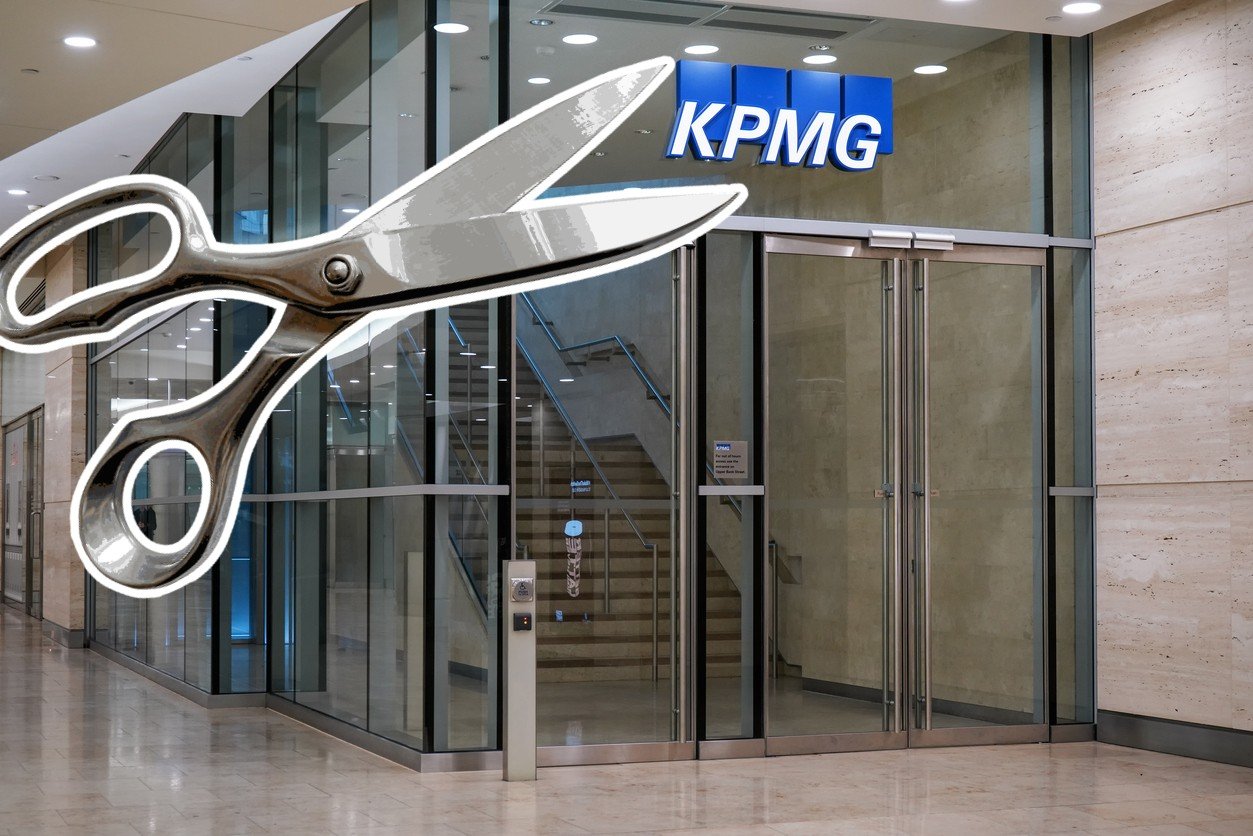
Layoff Watch ’26: The King’s KPMG Kindly Asks 600 Auditors to GTFO
We covered this story in yesterday's Monday Morning Accounting News Brief but it's significant enough news to earn its own spot in a separate article as it's a large market…

A KPMG Senior Director Got Beat Up By a Guy Who Stars in Reacher
Oh my God it feels like it's 2010 all over again with that headline. Thanks to the algorithm for putting this item in my feed since no one saw fit…

Friday Footnotes: Feds Get a Tax Preparer in Their Biggest Pandemic Relief Bust Yet; AI Is Coming For Offshore Busy Work | 4.10.26
Footnotes is a collection of stories from around the accounting profession curated by actual humans and published every Friday at 5pm Eastern. While you're here, subscribe to our newsletter to…
Apparently Shouting “Promote Me! Promote Me!” in a Partner’s Face Can Get You Promoted at Deloitte
Over in Ireland there's a case before the Workplace Relations Commission (WRC) right now that may be of interest to our readers, our readers being people who are all too…

Monday Morning Accounting News Brief: You Can’t Spell Audit Without AI; An Elaborate Scheme to Defraud the Air Force | 4.6.26
Hey. To our readers in tax let me just say you're doing great! Almost there! For everyone else, hopefully you're hanging in there as well. To everyone: be sure to…

Friday Footnotes: EY Tells Tax to Get Back in the Office; Associates Are Vibe Coding Now | 4.3.26
Footnotes is a collection of stories from around the accounting profession curated by actual humans and published every Friday at 5pm Eastern. While you're here, subscribe to our newsletter to…
Layoff Watch ’26: The King’s KPMG Kindly Asks 600 Auditors to GTFO
We covered this story in yesterday's Monday Morning Accounting News Brief but it's significant enough news to earn its own spot in a separate article as it's a large market…
AI Will Be EY Auditors’ New BFF, According to EY
While staff in tax at EY US will soon be spending more time with their flesh-based colleagues due to a return-to-office mandate that requires them in the office for an…

ICYMI: According to This AI CEO You Won’t Have to Go to Work in a Year
Commence to fantasizing about what you'll do with all that glorious free time when you lose your job to AI in 12-18 months because that's the confident prediction made by…

Another Early AI Accounting Startup Just Bit the Dust
TIL that early AI accounting platform Botkeeper has died. I found out via this CFO Brew article which pointed to a post on Botkeeper's own site. Turns out r/accounting was…

KPMG Brings Cheating Into the AI Age By Using AI to Cheat on AI Exams
The image is upside down because Australia. This story sounds like a joke but we assure you it is not. KPMG Australia has expanded KPMG's storied cheating repertoire by being…

KPMG Brings AI Talking Points to a Fee Negotiation, Inadvertently Opens a Pandora’s Box Filled With Stingy Clients
As reported by Financial Times on February 6, included in Friday's edition of Footnotes, and widely chuckled at by public accountants both current and former across the world since, KPMG…

Top Remote Tax and Accounting Candidates of the Week | October 16, 2025
Struggling to Find Remote Accounting or Tax Talent? We’ve Got You Covered.If your firm or internal team is having a tough time sourcing qualified remote tax and accounting professionals, you're…

Top Remote Tax and Accounting Candidates of the Week | October 2, 2025
Struggling to Find Remote Accounting or Tax Talent? We’ve Got You Covered.If your firm or internal team is having a tough time sourcing qualified remote tax and accounting professionals, you're…

Top Remote Tax and Accounting Candidates of the Week | September 25, 2025
Struggling to Find Remote Accounting or Tax Talent? We’ve Got You Covered.If your firm or internal team is having a tough time sourcing qualified remote tax and accounting professionals, you're…

Top Remote Tax and Accounting Candidates of the Week | September 18, 2025
Struggling to Find Remote Accounting or Tax Talent? We’ve Got You Covered.If your firm or internal team is having a tough time sourcing qualified remote tax and accounting professionals, you're…

Top Remote Tax and Accounting Candidates of the Week | September 4, 2025
Struggling to Find Remote Accounting Talent? We’ve Got You Covered. If your firm or internal team is having a tough time sourcing qualified remote tax and accounting professionals, you're not…
Twitter Feed
"KPMG said it plans to remove humans from routine testing so they can focus on more complicated tasks, while 'orchestration agents'—which autonomously manage several agents, potentially more than 20—handle testing duties."
Offshore team in shambles.
"The Institute of Chartered Accountants of Scotland (ICAS) has launched a new pathway for experienced overseas auditors to obtain UK Audit Qualification (AQ) and move more swiftly to ICAS membership and chartered accountant status."
🦔A researcher invented a fake eye condition called bixonimania, uploaded two obviously fraudulent papers about it to an academic server, and watched major AI systems present it as real medicine within weeks.
The fake papers thanked Starfleet Academy, cited funding from the

Here Are Tax and Audit Salaries at Top 25, Top 300, and Regional Firms
Recruiting firm Brewer Morris has released its 2025 US CPA salary guide and should you want to read the whole thing you can request it from them here. Perhaps you,…

Friendly Reminder Not to Work Yourself to Death For This Profession
Saw this on the bird app yesterday and thought its message would be worth passing along what with 20 days remaining until April 15 and nerves as strained as ever…

Accounting Firm Abruptly Nopes Out of Tax Season Early (UPDATE)
Ed. note: An earlier version of this article's headline stated the sheriff is investigating. The Alexander County Sheriff's Office informed us they are not investigating, only fielding calls from the…

This Deloitte Office Has Eliminated Trash Cans at Desks to Make Staff Get Up Off Their Asses
Boston Business Journal wrote an article about Deloitte's new office in Boston and for some reason they chose to lead with this: You won’t find trash cans at the desks…

The IRS Decided to Troll Tax Pros For 10/15
We realize the decision to run maintenance on IRS systems likely isn't made by anyone who understands deadlines but surely someone who does could inform the IT department of these…

Top Remote Accounting Freelancers: February 3, 2024
Looking to staff up for a season or hire a freelancer for a project? Accountingfly is ready to partner with you! Gain full access to a pool of highly skilled…

10 Essential Project Management Principles for Accounting Firms
Every accounting firm struggles with project management, with smaller practices that are rapidly expanding taking the brunt of the damage. As your firm adds new clients, takes on more work,…

6 Ways Email is Secretly Destroying Your Accounting Firm
Email: The word itself sounds innocent, doesn't it? Kind of like "snail mail," but faster, sleeker, and without the slimy trail. But don't be fooled—email is secretly a sinister beast,…

Don’t Grow Your Accounting Firm Out of Business! Break Up With These Unscalable Practices Now
Business growth is always a high priority for accounting firms, especially small-to-midsize practices. Take care, though, because growth can be a double-edged sword. If your firm expands too quickly or…
George Steinbrenner’s Final Win: The Estate Tax?
 By now most of you have heard that George Steinbrenner passed away this morning at age 80. We’d ask that you to wait at least a few hours before you start dispensing with the Costanza or GS quotes in Larry David’s voice (“Big Stein wants an eggplant calzone!”) but we realize not every one was a fan of the Boss.
The silver lining in Big Stein’s death is that since the estate tax still remains in limbo among the hallowed walls of Congress, his $1.1 billion fortune (Forbes’ latest ranking) could possibly pass to his heirs tax free.
It’s an especially well-timed passing if you read yesterday’s morbid Wall St. Journal article. If you didn’t happen to read it, the article more or less made the case for every wealthy person to give serious consideration to paging Jack Kevorkian, taking a nice warm bath with a toaster or whatever their preferred method of self-imposed death would be.
Steinbrenner is the third billionaire to pass on to the big baseball diamond in the sky (btw, can someone up there keep him away from Billy Martin?) this year – Walter Shorenstein and Dan Duncan are the others – and if the family is as shrewd about their money as they are about their baseball team, they will likely fight any retroactive provisions in the new estate tax (assuming it ever passes).
As with mentioned in the Duncan post, we hope that the Steinbrenners are able to keep their fortune; not because we’re opposed to taxing the rich (just ask AG), it’s because we’re opposed to an incompetent and impotent Congress who allowed the estate tax to expire in the first place. Besides, GS went out with the Yankees as reigning champs, so it seems fitting that he gets a final win against the tax man as well.
RIP Big Stein.
If You Want to Screw Up the CPA Exam, Here are 5 Ways to Do It
 I spend a lot of time yelling at you kids trying to tell you what to do: schedule early for the last window of the year, don’t overload yourself by trying to take on too many exam parts at once and be sure to bring your ID to Prometric (lay it out like your clothes on the night before the first day of school so you don’t forget).
Nag, nag, nag. I do it because I care and I want to see every accouig CPA dreams achieve their goal, even when that means a major risk for capital markets (you know who I am talking about, there are some people who shouldn’t be allowed within 50 feet of a balance sheet).
But let’s put all of that aside for now and talk about ways to blow it. I mean really blow it. Unlike most of my tips, if you follow these you’re pretty much guaranteed to fail.
Schedule too many exam parts in one window This is a common mistake, mostly for newbie CPA exam candidates. You get all excited and have three months to waste before starting work in the fall and decide to take as many parts as you can in a window just to get it over with. Great. Of course, you realize halfway through the first chapter of REG that you have too much on your plate and end up blowing all three. Congrats, you’ve just learned an important lesson: take it easy. We say no more than two exam parts per window and unless you will get fired if you don’t get this stupid CPA in the next 6 weeks, stick to that rule.
Put your social life (substitute “work life” for social life here if you don’t have one) ahead of the exam If you have a life, congratulations, but it’s going to have to get back burnered for a minute while you tackle this thing. You don’t have to break up with your girlfriend but if she isn’t in accounting and going through the same misery as you, you may have to cut her off for awhile so you can concentrate. You know, only if she’s that kind of girlfriend. Your friends will get over it. Try surrounding yourself with other, equally-miserable CPA exam candidates like yourself. They’ll never be available and will only pester you via text when they are procrastinating.
Study only when you feel like it This one is great for totally blowing it and if that’s your goal, all you have to do is tell yourself you’ll study after work or when you get a chance or maybe after the game is over. Without a solid study schedule, you’ll quickly realize you never feel like it.
Blow off the multiple choice and just watch CPA review videos Hey listen, in a former life I pawned CPA Review wares 60+ hours a week and let me tell you, we liked it when students got addicted to videos, it pays the bills. But we liked it better when students also did the homework because that meant they passed and failing students don’t help our numbers nor testimonials. So go ahead and stick with the “I’m going to watch FAR thirteen times until it totally sticks in my brain” method, it means more money for repeats and we liked that too.
Spend every moment obsessing over things that aren’t often tested or worth much (like research) Want a surefire way to fail? Focus on the minute details and obsess over rarely-tested information, ask questions in Live class about your own 401(k) instead of pensions and get really bent out of shape over tiny punctuation errors in your review texts. Chances are if this is your strategy, you’ll not only fail miserably but piss off a few CPA review instructors in the process. Good luck with that. Really.
Accounting News Roundup: Financial Reform Inches Closer; Small Biz Continues with Bleak Outlook; Kwame Kilpatrick Gets Tax-Funded Counsel in Tax Fraud Case | 07.13.10
Finance Bill Close to Passage in Senate [WSJ]
“Two Senate Republicans said Monday they would support the Obama administration’s financial-overhaul legislation, and Democrats now believe they have the 60 votes needed to push the sweeping bill into law by the end of the week.
Sens. Scott Brown of Massachusetts and Olympia Snowe of Maine both said they would vote for the measure when Democrats bring it to a vote, which could happen as soon as this week. Democrats and administration officials believe this gives them the necessary backing to overcome a potential filibuster after weeks of uncertainty and unexpected pitfalls.”
Abu Dhabi May Make BP Investment, Crown Prince Says [Bloomberg]
“Abu Dhabi Crown Prince Sheikh Mohammed bin Zayed Al Nahyan said the emirate is considering making an investment in BP Plc.
‘We are still thinking about it,’ he said in an interview in Abu Dhabi today, when asked about potentially buying a stake in the London-based oil producer. ‘We are looking across the board. We have been partners with BP for years.’
BP Chief Executive Officer Tony Hayward said on July 7 that he had a “very good” meeting with the crown prince as analysts said the oil producer may be looking for support from Middle East investors. BP shares have gained 26 percent since the start of July as the company gets closer to containing its leaking well in the Gulf of Mexico, the worst oil spill in U.S. history.”
Small Businesses Get More Pessimistic [WSJ/Real Time Economics]
“Small businesses continue to feel highly pessimistic about the U.S. economic outlook, according to a report Tuesday that showed a monthly indicator of their sentiment turning weaker in June.
The National Federation of Independent Businesses said its Small Business Optimism Index dropped 3.2 points to 89.0 last month, more than erasing the modest 1.6-point gain it saw in May. The report, which was compiled by NFIB Chief Economist William Dunkelberg, described the decline as ‘a very disappointing outcome.’ “
Kilpatrick expected to ask for court-appointed counsel for fraud case [WXYZ]
Kwame Kilpatrick needs taxpayers’ help in his tax fraud case, namely paying for a lawyer. Since he cannot afford one, the people of Michigan will be picking up the tab.
Man Claims Ownership of Facebook [WSJ]
Today in wild-ass lawsuits, “A New York judge has issued a temporary restraining order restricting the transfer of Facebook Inc.’s assets, following a suit by a New York man who claims to own an 84% stake in the social-networking company.
Paul D. Ceglia filed a suit in the Supreme Court of New York’s Allegany County on June 30, claiming that a 2003 contract he signed with Facebook founder and Chief Executive Mark Zuckerberg entitles him to ownership of the company and monetary damages.”
For Starters, PwC Pays Their Attorneys a Lot of Money
“How can any self-respecting attorney still argue – and any lucid judge still believe – that PwC’s global firm is not just a sham legal construct, an artificial vehicle for the strongest member firms to control and potentially exploit their weaker ones, all under the guise of ‘improving quality and seamless delivery to multinational clients…’ ?”
~ Francine McKenna still isn’t buying it.
Four Ways to Explain Gaps in Your Resumé
Slow Monday, GC’ers? You’re damn right. Call up your buddies and make today Margarita Monday. What better way to prepare for Tequila Tuesday, amiright?
I received the following question in my inbox from a recently unemployed reader:
I was let go from my firm in the fall of 2009. I have since found a part-time job but am struggling to secure full-time work. I’m afraid that if I go too long without finding a new job that I’ll have a hard time explaining the gap in my resumé. What do you suggest?
My two Lincolns follow:
Part-time work is better than nothing – If you have ever been between jobs, you know that job searching is not a 9-5 ordeal. After the first few weeks of searching the Monster’s and CareerBuilder’s of the online world, one becomes very efficient in their respective search capabilities. Jobs are not filled in a first-come-first-served manner either, so it becomes a matter of searching new jobs (typically Monday and Friday are the most popular posting days) once a day to make sure you’re on top of the newest opportunities.
That said, you’ll find yourself with a lot of time during the days. Rather than catch up on your Netflix account, find yourself a part-time job or volunteer opportunity. It will keep your mind active, your spirits up, and even some extra change in your pocket. This also shows that maintaining a work ethic and staying professionally active is important to you
Update your resume on a regular basis – On the flip side of the online job market pool, employers know the last time you updated your resume. Revising your resume once a week will ensure that it remains near the top of searches. I’m not saying you should re-work your work experience every week; changing even the slightest detail is enough to register as an update in their system.
Be honest – Whatever you do, do not lie to your recruiter or the HR professional representing a potential job. In addition to background and credit checks, employment verification checks are becoming ever more popular. Don’t feel like you need to lie about when you lost your pervious job; you’re not the only person that has been affected by the recent recession. Which brings me to my last point.
You’re not alone – Sure, the recession has led to a saturated job market; employers understand this as they begin to re-hire individuals. Recent gaps in your resumé are not scarlet letters (like they would have been in 2007) for your chances of landing an interview.
Once that interview is secured, be honest and upfront about the missing time pieces in your work experience. And whatever you do, hit home the fact that you’re hoping a new role with ABC Inc. will lead to a successful future of stability and growth for both you and the company.
Mysterious CFO Firing of the Day: Angeion Corp.
Anyone that is in St. Paul/Minneapolis (ideally Baker Tilly Virchow Krause employees) should get in touch with us because this reeks of bad behavior that we absolutely must know about:
Angeion Corporation has terminated the employment of its Chief Financial Officer, William J. Kullback, effective July 9, 2010. The termination of Mr. Kullback is not related to any issue with respect to the Company’s financial statements.
Yes, that’s all there is. We did poke around a little bit and found that Mr Kullback was formerly with Price Waterhouse which could lead to believe that he’s got a bit of a temper and/or was roofied but then again we’re just throwing that out there.
We rang up Angeion to see what’s what and left a message with CEO Rodney Young who is supposed to call us back. We’ll report back if we find out the scoop.
8-K [SEC Filing]
UPDATE: Mr Young got back to us and we had a very pleasant chat although he wouldn’t elaborate on the dismissal of Mr Kullback, so speculate away! Or if you’ve got actually knowledge that will do too.
The Way Things Are Going, Eventually No One Will Have to Comply with Sarbanes-Oxley Section 404
As we trudge toward a Senate vote on he financial reform bill, one issue that is of utmost interest to those in the accounting/audit biz is that of small businesses complying with Section 404(b) of Sarbanes-Oxley.
As it stands, only a small number of non-accelerated filers are voluntarily in compliance with 404. Those not jumping at the voluntarily complying with 404 have enjoyed the repeated delays by the SEC since the legislation was passed in 2002.
But if reform bill passes in its current form, all companies with market caps of less than $75 million will be exempt from complying with the requirement to have an audit of their internal control system. And even those companies that went to the trouble of voluntary compliance, might not continue doing so:
Dan Crow is one of the few small-company CFOs with an auditor’s stamp on his internal controls. Getting it wasn’t as time-consuming or as costly as it would have been several years ago, when large public companies first began complying with one of the most onerous requirements of the 2002 Sarbanes-Oxley Act, known as Section 404.
Still, Crow, who oversees finance for retailer Hastings Entertainment, doesn’t rule out dropping the extra review next year if Congress decides to permanently exempt small public companies from needing an auditor’s sign-off on their internal controls — as it seems poised to do. The Senate is expected to vote this week on the final version of the financial regulatory reform bill, which would exempt companies with market caps less than $75 million from complying with Section 404(b), the rule in question. (The House has already passed the bill.)
But that’s not all! Because 404(b) is clearly “red tape” (a popular rallying cry in an election year) that provides no benefits whatsoever and just crushes the spirit of small business (the backbone of America, we might add!) Congress has called for a study of “how the ‘burden’ of 404(b) compliance for companies with market capitalization between $75 million and $250 million could be reduced, and whether an exemption for them could increase the number of initial public offerings in the United States,” in the bill.
Christ, where does it end? Let’s just study the whole damn thing over while we’re at it. Apparently the entire Congressional body has completely ignored the benefits of Sarbanes-Oxley; never mind that costs of gone down significantly in the past eight years, making compliance less financially painful.
And not to mention that smaller companies are at greater risk for fraud and accounting manipulation. Look at the roster of companies on Sam Antar’s website and you’ll note that many of them have market caps of $1 billion or less. If these companies can’t resist the temptation to get shifty with financial reporting in order to meet (or not) the short-term focus of Wall Street, it’s difficult to reason that even smaller public companies won’t succumb to it.
Forced Rankings Appear to Be in Full Effect at Ernst & Young
Confirming some discussion in the comments from last Friday’s Ernst & Young compensation post, a source got in touch with us with more details on some rankings getting chopped:
I’ll confirm what your sources are saying about reviews being available in fso. Not only that, but forced rankings are in full effect. While [there] was less pushback during roundtables earlier (which was accurrate at the time), the ratings for at least 5 people were lowered by a notch from what was agreed to by the full committee at the end of may. (5 to 4, 4 to 3) While they do say after all people are discussed they’ll assess the levels to ensure the same criteria is being used, I firmly belive its being used as a way to lower ratings (and raises). Why have the formal review committees (roundtables) if the partners are going to have the ability to act unilateraly to ‘right size’ the ratings?
We’ll still have to wait a couple more weeks before we find out if the forced rankings actually translate into disappointing raises, as the official communication won’t come until August but this news surely doesn’t bode well. If you got knocked down a peg, discuss below and as always, keep us updated.
Job of the Day: Citi Needs a Financial Accounting Analyst
 Citi is looking for an experienced accountant to join its SEC Reporting Group as a Financial Accounting Analyst role in New York.
In addition to responsibilities within SEC Reporting, the position may involve income statement analysis, fair value reporting and investments portfolio analysis.
Qualifications include a bachelor’s degree with public accounting experience preferred.
Company: Citi
Title: Financial Accounting Analyst 3
Location: New York
Responsibilities: Position is part of the SEC Reporting Group which is responsible for Citigroup’s Earnings Releases, 10-Qs, Annual Report / 10-K. SEC Reporting is also responsible for Citibank N.A. Audited Financial Reporting and New Accounting Pronouncement analysis and implementations. The preferred qualifications for this role are a licensed CPA with public accounting experience. The candidate should have strong finance and analytic skills. The role requires flexibility with hours and assignments to accommodate the requirements of the SEC’s reporting calendar as well as the Company’s financial deliverables. This replacement position may likely work on income statement reporting and analysis and the related financial monthly closes, as well as, Fair Value Reporting and Investments portfolio analysis.
Skills: College degree in accounting or finance, CPA and Public Accounting experience strongly preferable. Experience in SEC financial analysis and reporting and /or financial services is beneficial. Strong quantitative and PC (Excel, Systems) skills are needed.
See the entire description over at the GC Career Center and visit the main page for all your job search needs.
So You’re a CPA Thinking About Law School
 We try to encourage you to think about your careers here at GC every once in awhile; present you with some options or ideas that maybe you haven’t considered before. We’ve covered several credentials out there that you can obtain and we’ve also touched on the pros and cons of the PhD.
But this time we’re going to get really crazy and give you the lowdown on an idea that we know many of you have had (including your humble editor) and that is the consideration of going to – gasp – law school.
For whatever insane reason, you can’t shake the idea of committing three years of your life and borrowing tens of thousands of dollars to live on PB&J, ramen noodles and frozen pizzas. Oh and of course there’s studying, tests and everything else that comes with returning to school.
But think about the benefits; you’ve got the CPA and if you were to get the JD, maybe you’ll top it off with an LLM and it’ll be smartest thing you’ve ever done. Think about the money! The prestige! The hot lawyers that you will bed and wed! It will all be worth it, right?
Well, maybe? If you spend even a little bit of time reading our sister site Above the Law, you might get the impression that the last thing you should ever do is go to law school. There’s an ncertain job market out there. You may end up with a huge debt load that can take a lifetime to pay back. And we’ve been told by a fair amount of our lawyers simply, “It’s just not worth it.”
Considering all that, we wanted to get some first-hand perspective, so we put the feelers out to a few CPAs turned lawyers to get an idea of their experience so those of you considering law school can make a more informed decision.
We spoke to three CPAs turned attorneys, Eric Gullotta who has his own practice in Sonoma, CA, Steve Farrar of Smith Moore Leatherwood in Greenville, SC and Timothy Gagnon who has in own practice in Needham, MA.
Messrs Gullotta and Gagnon both specialize in estate planning and taxation while Mr Farrar is a litigator who defends lawyers and accountants in malpractice lawsuits.
The three men agreed that their decision to go back to law school was worth it but that the process is certainly a challenge, “It was a tough three years. Probably the hardest thing is getting re-oriented with being a student after being out for awhile,” Mr Gagnon said.
Motivation and Benefits
Gullotta and Gagnon both believe that the biggest benefit that they’ve enjoyed by obtaining the law degree is that clients recognize the value that a background of a CPA can add to providing legal services. “The amount of respect and trust that clients put in you when you are both a lawyer and a CPA is really unbelievable,” Mr Gullotta told GC. “Being able to see the tax effects of legal transactions is really amazing and you can really bring value to your clients when you are able to negotiate or structure deals with tax effects in mind.”
Steve Farrar had a very different thought process before he returned to school. He went back because he was interested in being a trial lawyer, “I went back to law school with the intent to try cases,” he told us. While he was interviewing, most firms wanted him to consider working in a more transactional capacity but he found a firm that was willing to let him work in litigation and it turned out to be a perfect fit, “I’ve been ecstatic. While you might hear stories about people being burned out, I enjoy every minute of it.” And the biggest benefit for him? “This is going to sound hokie when I say it but I enjoy the theatrical chess match of going to trial.”
Back to School
But before getting to all the benefits of CPA/lawyer superstardom, there is the little matter of going to law school. While many lawyers we’ve talked to have said that the law school you attend is everything, it really depends on what you’re looking to accomplish with the degree. As Eric Gullotta told us, “it’s important to know what you what to do. If you want to work in [a large city], you’ll have to go to a reputable law school. If you want to practice locally, hang the shingle out, then you can go to slightly less prestigious school that is more practical for your situation.”
And being a CPA could possibly put you at an advantage when applying to law schools, “The interesting thing is that because you have experience and have a CPA, it can help you get into some of the better law schools,” Tim Gagnon said. “They’re looking to diversify their class, age, experience and you could bring something that diversifies the class that they can’t get out of somebody that just got out of undergrad.”
Drawbacks
But there’s got to be drawbacks right? Besides all the lawyer jokes, Steve Farrar mentioned losing flexibility in his schedule, “The best way I can explain it is that I have multiple busy seasons but I never know when they’re coming.” For Tim Gagnon, it sheer volume of continuing to keep up-to-date on the changing rules, “It’s hard enough to keep up on one but you put the two together and you really have a lot of information to cover.”
Oh, and then there’s the practical (and possibly more important) stuff, “Higher malpractice insurance,” according to Eric Gullotta.
So, are your aspirations for law school a good idea? Hard to say. Knowing what you want to do with the degree seems to be the key to making a decision. If you are thinking that a law degree will be the solution to your self-perceived lackluster career to date, you could find yourself very disappointed.
However, if this is a career that you truly want then it sounds like there isn’t any shortage of success stories. Choose wisely.