

It’s not boomers.
TLDR
- What’s happening: McAfee’s 2026 Tax Season Survey shows 1 in 4 Americans surveyed have fallen for some kind of tax scam and young people are particularly vulnerable
- Why it matters: 93% of the 161 million individual income tax returns processed by the IRS in fiscal year 2024 were filed electronically. With tax prep a predominantly online/electronic activity these days, scammers are constantly looking for ways to inject themselves into the process.
- Key takeaways: Tax scams can happen to anyone, even tax preparers themselves. Scam methods are constantly evolving.
McAfee has just released the results of their 2026 Tax Season Survey and not to use a played out early internet clickbait line but you won’t believe what they found!
When you think of the people most likely to be scammed you likely imagine boomers who hold their iPads two inches from their faces and you imagine this smugly if you are, like most readers of this website, a millennial or Gen Xer. We grew up on the internet and watched as scam methods first grew out of the Wild West of the WWW, surely we know better. It also follows that the younger generation would be even better than us at spotting scams because we assume young people who have been using tech since they could hold a phone are even more adept at navigating our digital world but you, middle-aged person reading this and slowly nodding your head in agreement right now, would be wrong.
According to the 3,008 Americans McAfee surveyed, almost 1 in 4 (23%) have fallen for some kind of tax scam. Worryingly, 42% of that group is 18-24-year-olds, so the youngest Gen Zers. Barely even started filing taxes and they’re already getting scammed.
McAfee doesn’t break down all the various tax scams people have fallen for in this report but it does mention a specific one that we don’t see discussed too often: fake EIN sites.
The way this one works is scammers set up an official-looking website and charge people to register for an EIN, something you get for free when you request it from the actual IRS directly. In some cases they’re semi-legit, just charging a few hundred bucks for it. In others, it’s a full identity scam. This is an example given by McAfee in their report:
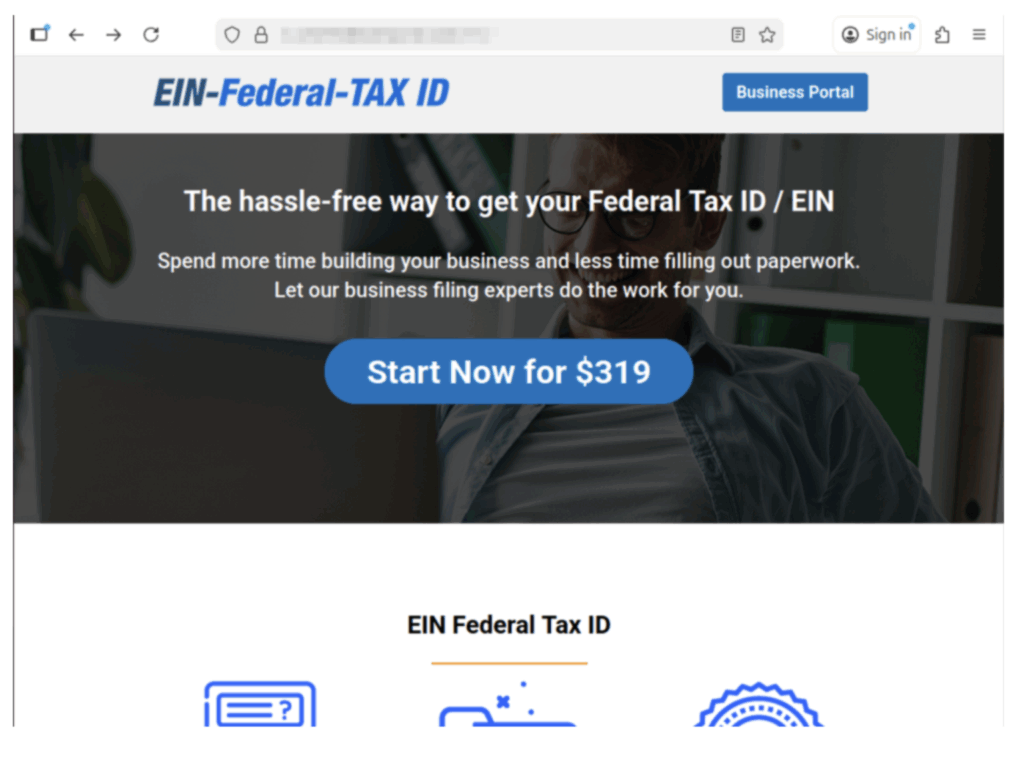
Small business owners can request an EIN from the IRS here. Free. We’ve linked directly to the IRS.gov site at that link but just to be safe, we advise you double-check the address of the URL before putting in any personal information because that’s just safe internet practice.
Here’s a scary figure McAfee dropped: Between September 1, 2025, and February 19, 2026, McAfee Labs identified 1,468 malicious or suspicious tax-themed unique domains, an average of 43 new fake tax websites every day. One tip we have is to use a Whois search to research any domains before you enter any personal information on the site, even if you think it looks legit. If we look up IRS.gov, we see it was registered in 1997:
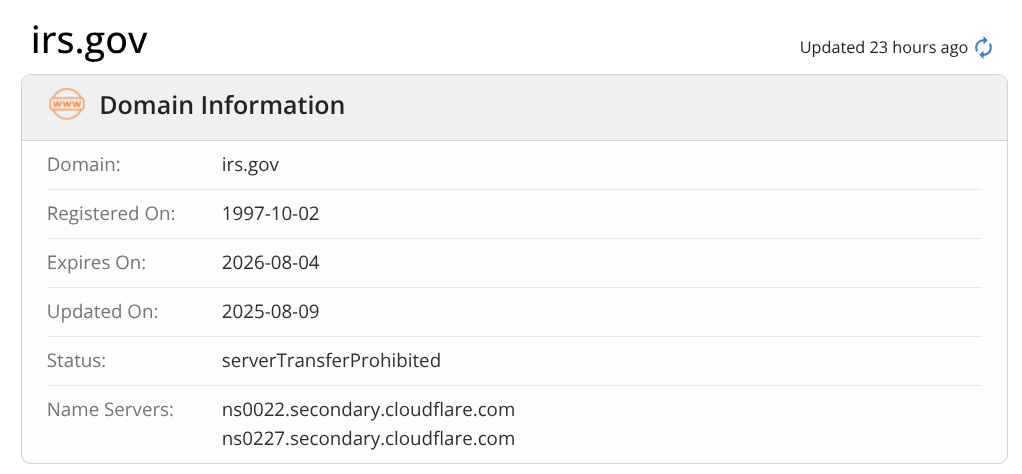
If you look up some of these scam IRS-like sites, they’re almost always recently registered in the last few months since they tend to get taken down constantly. You can report fake sites and scams directly to the IRS.
A few more key findings from McAfee’s survey before we wrap this up:
- 82% of Americans say they’re concerned about tax fraud this season.
- 67% say they’re seeing the same or more tax scam messages than last year.
- 40% say tax scam messages are more sophisticated than last year.
- 84% are concerned about AI making tax scams more realistic.
- Only 29% say they’re very confident they could spot a deepfake tax scam.
The unfortunate lesson here is that no one is safe. Stay skeptical, kids!
Tax Scams Hit Nearly 1 in 4 Adults. Spot the Red Flags [McAfee]



No posts about the guy that picked a fight with Jack Reacher appears to potentially be a KPMG director?
I only just now saw it! No one sent in a tip 😢