After Constant Lehman/Ernst & Young Press Coverage, the PCAOB Is Ready to Get Serious About Audit Committee Communication

So maybe you heard about Ernst & Young and how they kinda, sorta didn’t bring up the shady accounting going on over at Lehman Brothers to the audit committee until a Matthew Lee, your fired whistleblower du jour, brought it up. Some people have suggested that if E&Y had made a single peep about this prior to, say, 2008, maybe we wouldn’t be having this discussion (okay, we’d probably still be having it).


The controversy over this incommunicado has now jolted the PCAOB into action as the they have announced an open meeting for Monday at 9:30 am sharp. Basically, they want to feel everyone out on a standard for required communication for auditors with the audit committees.

As Emily Chasan of Reuters notes, “The PCAOB has considered issuing rules on this issue for the past several years to formalize ways that auditors are expected to communicate with the audit committee of the company they are auditing,” but in classic reactionary fashion, nothing has been done up to this point. Now that we’ve had bankruptcy reports, recycled stories in the press, E&Y hating back the haters, and everything else in this shitstorm, the PCAOB is ready to talk about this.

So, if you’ve got no plans on Monday morning and happen to be in DC, head over to hear the discussion and throw in your $0.02. In the meantime, we’d love to hear some of your suggestions for mandatory talking points from the serious (e.g. accounting treatment that makes the partner even slightly queasy) to the über-ridiculous (e.g. biggest whore on the audit team).

Accounting News Roundup: Dodd Requests Investigation of Lehman “Accounting Manipulation”; Ernst & Young Makes Case to Audit Committee Members; House Passes Health Care Reform | 03.22.10

Dodd Seeks U.S. Inquiry Into Lehman’s Accounting [DealBook]
Late on Friday, Senator Chris Dodd (D-CT) sent a letter to Attorney General Eric Holder requesting that the Department of Justice investigate Lehman Brothers’ “accounting manipulation” that contributed to its bankruptcy. According to his letter, Dodd also wants the DOJ to investigate “other companies that may have engaged in similar accounting manipulation with a view to prosecution of employees or agents who contributed to any violations of the law.”

With the exception of Lehman, Dodd did not name any companies specifically. He wrote, “We must work tirelessly to reduce the incidence of financial fraud in order to restore trust and confidence in the financial markets. A task force investigation and taking appropriate Federal actions in these matters will contribute to these goals.”


An Ernst & Young Response: Dear Audit Committee Member… [Re: The Auditors]
Ernst & Young is on the offensive, telling everyone who will listen their position on the results of the Bankruptcy Examiner’s report. The ubiquitous Enron and Andersen comparisons in the MSM — while cliché and misleading — have motivated E&Y to reach to audit committee members that ulitmately decide whether E&Y will be providing services to their companies. Francine McKenna posted the letter noting, “I guess they know where their bread is buttered: With the guys who hire and fire them in the Fortune 500.”

The firm addresses everything from the actual accounting, “The media reports that these were ‘sham transactions’ designed to off-load Lehman’s ‘bad assets’ are inaccurate,” to whistleblower Matthew Lee’s letter, “When we learned of the letter, our lead partner promptly called the Audit Committee Chair; we also insisted that Lehman’s management inform the Securities & Exchange Commission and the Federal Reserve Bank of the letter.”

Naturally, the firm plans to defend themselves vigorously stating, “EY is confident we will prevail should any of the potential claims identified against us be pursued.”

Obama Hails Vote on Health Care as Answering ‘the Call of History’ [NYT]
Last night, the Senate bill was approved by the House, 219-212, and it could be headed back to the Senate for final approval as early as this week. In a shocker, Democrat and GOP views on the bill don’t seem to be converging as one Dem legislator described it as “the Civil Rights Act of the 21st century,” while a GOP member described the bill as, “a fiscal Frankenstein.”

Accounting News Roundup: GOP Says Healthcare Bill Will Expand IRS ‘Tentacles’; Jonathan Weil Counts Some of E&Y’s Bodies; RIP Jerry York | 03.19.10

GOP targets IRS in latest health battle [The Hill via TaxProf]
The GOP is still fighting the health care bill tooth and nail and this may be the most effective strategy we’ve seen so far. Forget about debating coverage, preexisting conditions, etc. etc. Just name drop the IRS and a large group of people may change their minds about the whole thing.

“This is a vast expanse of power,” said Rep. Charles Boustany Jr. (R-La.) during a Thursday call organized by Republicans on the Ways and Means Committee. He said the IRS provisions in the healthcare bill “dangerously expand, in an ominous way, the tentacles of the IRS and its reach into every American family.”

On the surface this appears to be the typical GOP “the IRS is eeeevilllll” pandering but the real concern should be that the Service already has a lot to do. The Hill reports that if taxpayers are required to purchase health care insurance but fail to do so they could face fines. The IRS would be responsible for administering and collecting these fines.

Add that to this small task, “The IRS retrieved $2.35 trillion in 2009 by processing 236 million tax returns. It also is working to reduce a $345 billion gap in the taxes it collects and should collect.” Not to mention they’re trying to update systems, answer more phone calls, getting into high speed car chases. There’s always a lot going on.

And in case Rep. Boustany needs caught up, the Service is already auditing more people and trying to collect every dime nickel penny it can.

Lehman’s Auditor Goes Blind From the Cooking [Bloomberg]
Jonathan Weil is not buying what Ernst & Young is selling. He reports that E&Y spokesman Charlie Perkins denied that the firm had “mischaracertized [the Bankruptcy Examiner’s] findings,” and characterized it this way, “[B]y E&Y’s twisted logic, it would be possible for a company to lie in its financial statements about its off-balance-sheet liabilities, and still manage to account correctly for them in the same financial statements. Imagine that.”

Weil takes off the gloves and digs up some old bodies, namely: partners recently sentenced to prison time for tax shelters; Bally’s (including vice chair Randy Fletchall); HealthSouth; Cendant (man, he’s going way back). Weil then thinks out loud, “With that kind of track record, it’s a wonder anyone would accept anything this firm says at face value again.”

Jerry York, Iconic CFO, Dies at 71 [CFO]
Served as CFO for IBM, Chrysler. Adviser to Kirk Kerkorian and board member at Apple.

Former SEC Chairman Pitt: Criminal Prosecutions Are Possible for Ernst & Young, Lehman Execs

Okay then! Not exactly what you’d want to hear from a former SEC Chairman on Monday but what’s a former SEC honcho to do? Paint a rosy picture for everyone? Hell no! The man is gong to get real about this latest bank/accounting firm disaster. Barron’s ran down Harv to get his $0.02 on the whole Lehman/E&Y sitch and he he laid it out for Dick Fuld, E&Y, et al. as how to best handle this dicey situation.

Regarding the timing of a response to the report, you best explain yourselves ASAP and while you’re at it, none of that fancy-schmancy language. Everyone needs to be able to understand this:

If they want to avoid the logical consequences of the Report’s conclusions-and none of those consequences are at all good for either Fuld or E&Y-they will need to come forward quickly with a very plain, easily understandable explanation of the errors or their defenses. The longer it takes them to do that, the less likelihood they will have of mitigating the publicity the Report’s allegations have already received.

Consequences, you ask? How about indictments? How about no more SEC clients for E&Y? Next Andersen? Maybe! Shockingly, the SEC seems to be dragging its feet, per the usual standard operating procedure (emphasis original):

Many are wondering why there hasn’t been any action taken, and why the government hasn’t reported on the same events itself. Criminal prosecutions are possible, as are SEC civil actions. For Fuld, an SEC action could mean that he would forfeit his right to participate in the securities industry and possible disgorgement of monies he received over the years from Lehman. For E&Y, the SEC has the power to suspend their right to practice accounting, limit their ability to take on new clients, and impose remedial sanctions.

Yeah, that last part is kind of the crux. As you may recall, Andersen did not bite the dust because of the money it had to pay to Enron investors but because it’s reputation took such a bad hit that states began revoking their license even before the firm voluntarily surrendered its license to practice before the SEC. This occurred after Andersen clients started running away from the firm like a band of lepers. There’s no indication that’s what will happen to E&Y but there’s a 2,200 page report with E&Y’s name all over that says nothing flattering about the firm.

And say what you want about Harvey Pitt: bearded Bush yes-man, lawyer, whatever. As far as we can tell, he has nothing to gain by throwing out wild-ass speculation about what the possible outcomes could be.

Lehman: Criminal Prosecution Possible, Says Pitt [Barron’s]

Inside Ernst & Young: Talking Points on Lehman Brothers

If you’ve ever worked at a Big 4 firm, you’re aware that when big news hits the MSM, A) it’s never good and B) there is typically some sort of communication from management reiterating the firm’s position on the matter, everything is cool, thanks for your hard work, etc. etc.
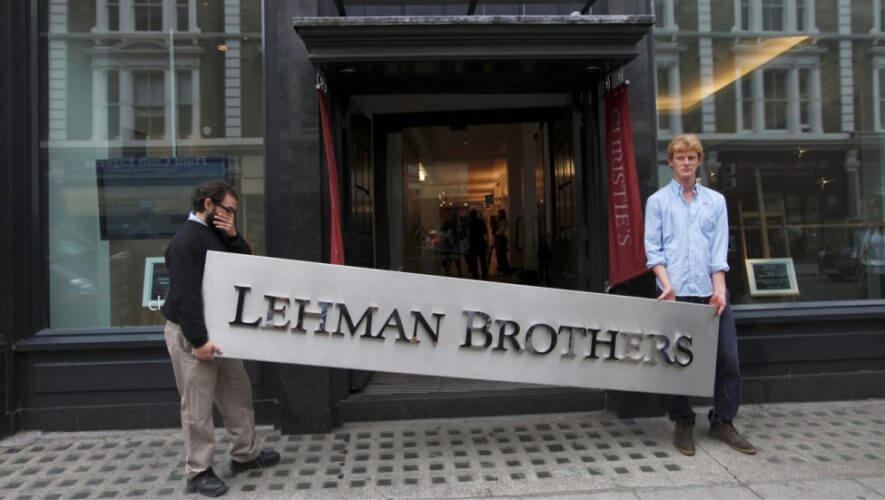
With last week’s revelation of the bankruptcy examiner’s report on Lehman Brothers, E&Y seems to be following this protocol as it relates to the troops on the ground. As you would expect, leadership is keeping their heads about this while in the background in-house counsel is likely engaged in all-night smoky room strategy sessions.

We checked in with a few of our Ernst & Young sources to get an idea of what people were thinking and so far, there doesn’t sound like there are any signs of panic (yet!).


From one source:

Overall reaction from what I gathered is pretty muted. We did get a call from some of the higher-ups saying that we reviewed our work and that we feel that our audit was completely adequate and that Lehman’s failure was nothing more than the same systemic failure of two of the other major banks and that we plan to defend ourselves vigorously. Presumably, the examiner’s report really didn’t give any ah-ha moments….

[I]s there a possibility of a payout at some point? It’s possible. Are we worried that we’re the next Arthur Andersen? I don’t think so.

So at least on the surface, E&Y leadership is communicating that what came out in the report wasn’t surprising and that the defense of the firm’s position will be, as usual, vigorous.

That doesn’t of course stop the speculation:

I heard from a technical guy there was some concern because they didn’t issue a going concern opinion [for the previous audit].

And as you might expect, “I heard that [the firm] helped cook the books and is deep shit,” with the book cooking being arguable but pretty hard to prove and the “deep shit” aspect being a given.

Some Ernst & Young partners are probably losing sleep just thinking about the potential liability involved here but eventually they’ll get over it (until something else comes up).

No partner worth their salt got admitted to the partnership focusing on the downside. The problem is that when people use consistently use words like “deceptive” and “misleading” to describe Lehman’s accounting this reflects poorly on the firm since they were comfortable with the treatment.

And because it’s still busy season for a lot of people, they are focused on the shitstorm that currently surrounds them, not one that will likely drag on for years after they’ve left the firm (voluntarily or otherwise).

Anyone with more insight or thoughts on the matter, get in touch with us and we’ll keep you updated on the chatter inside E&Y.

Quote of the Day: Ernst & Young Partners Losing Sleep? | 03.12.10

“A successful lawsuit against E&Y could result in a court finding that the failure to properly advise the audit committee prevented Lehman from taking genuine steps to substantially reduce its leverage, which may have saved the firm from bankruptcy. Which is to say, E&Y could find itself blamed for all the losses to Lehman shareholders. That would be a stretch – such a claim would be speculative – but it still should be scaring the heck out of the partners.”

~ John Carney

One Accountant Was Enough to Discuss Lehman’s Accounting on CNBC

Maybe it’s because everyone is still working like crazy and couldn’t get away for a TV appearance. Maybe Jim Turley couldn’t find decent footwear but how CNBC managed to get only ONE accounting expert in on this panel to talk about the Ernst & Young, Dick Fuld, et al. Sarbanes-Oxley and the Repo 105 is beyond our comprehension. Throw in four journalists and a “fellow” and you’ve got yourself quite the free-wheeling discussion on the double-entry system.


Personally, “[N]ot technically violating the rules, that’s why the auditors could kind of sign off on it even though it was incredibly misleading and deceptive,” was our favorite line.

But the poor accounting expert seemed to be a nervous wreck. Aren’t wet bars standard?

Are Big 4 Auditors Irrelevant?

Okay people, the calls for the complete obliteration of the accounting world have begun. Check that. It’s more or less the accounting world as it relates to auditors of public companies (i.e. Big 4 auditors).

Steve Goldstein at MarketWatch, for one, is NOT A FAN, “What precise purpose does it serve to have a supposedly independent auditor (paid for by the company) sign off on accounts? From Enron to Lehman to Satyam to Parmalat, it’s clear that the major accountants lack either the skill or the determination (or both) to ferret out fraud.”


So in case you didn’t catch it, he’s calling into question the Big 4’s (our assumption) integrity, competence and fortitude. Oh and before you start huffing about “it’s not the job of the auditor to detect fraud,” we’d argue that’s not even the point any more. Lehman was engaging in what a former CFO calls “shenanigans” that E&Y knew about for years and went along with it. Why? Because Lehman said everything was kosh.

Goldstein goes on:

Company executives already are forced to sign off on their accounts. When they are caught lying, companies face liability over disclosure.

So the threats that keep (some) companies honest are there regardless of whether the reports are audited. The outside auditors themselves are assigned a negligible value by the market.

A solution? Here’s two admittedly out-there solutions that the Securities and Exchange Commission probably won’t adopt.

One is quite simple: get rid of accountants. Who cares? They add no value, and their expenses weigh on the bottom line.

The other would be for someone else to hire the accountant. How about the company’s top five shareholders? While the likes of Fidelity would grumble about the added costs and the free-rider benefit for smaller shareholders, they would certainly have an interest in securing a far tougher audit.

Okay, Big 4 auditors, here’s your homework: explain why auditing for public companies isn’t irrelevant. We’ll listen, we swear. Or just start shooting off at the mouth if you feel it necessary. Goldstein isn’t the first to make this determination. Francine McKenna and Jim Peterson have argued that the value of an auditor’s opinion has been nil for quite some time and they’re both Big 876454 alums. It’s okay if you admit it. Acceptance is the first step.

What exactly is the point of having accountants? [MarketWatch]

Ernst & Young Was ‘Comfortable’ with Lehman’s Shady Accounting

Late yesterday, U.S. Bankruptcy Examiner Anton Valukus released a 2,200 page report that details the collapse of Lehman Brothers. It points the finger at Lehman execs for engaging in shady accounting that Ernst & Young knew about and was comfortable with. Lehman’s Board of Directors were not informed of the questionable accounting treatment.

To put it in more technical terms: Ernst & Young is in deep shit. The lead partner on the Lehman audwed more times than Dick Fuld for crissakes.

The accounting in question was known inside Lehman as “Repo 105.” These transactions moved billions of dollars off of Lehman’s balance sheet that were described by emails in the report as “basically window dressing” and their global financial describing them as having “no substance.” The Times reports that the treatment was so crucial to LEH that one executive, Herbert McCade, was known internally as the “balance sheet czar” and that he described in an email that the treatment was “another drug we r on.”


The really bad part for Ernst & Young is that they were okay with the “drug.” From the report, the lead partner stated that E&Y “had been aware of Lehman’s Repo 105 policy and transactions for many years.” For you wonky types, Lehman was accounting for these “Repo 105” transactions based on guidance from Statement on Financial Reporting Standard 140, Accounting for Transfers of Financial Assets and Repurchase Financing Transactions.

E&Y’s “team had a number of additional conversations with Lehman about Repo 105 over the years,” although they were not involved with drafting the policy nor did the firm provide any advisory services related to the transactions. According to the lead partner on the engagement, the firm simply “bec[a]me comfortable with the Policy for purposes of auditing financial statements.”

The problem, according to the Examiner’s report is that E&Y was okay with the treatment based on the theory:

Ernst & Young’s view, however, was not based upon an analysis of whether actual Repo 105 transactions complied with SFAS 140. Rather, Ernst & Young’s review of Lehman’s Repo 105 Accounting Policy was purely “theoretical.” In other words, Ernst & Young solely assessed Lehman’s understanding of the requirements of SFAS 140 in the abstract and as reflected in its Accounting Policy; Ernst & Young did not opine on the propriety of the transactions as a balance sheet management tool.

According to Lehman’s Global Financial Controller Martin Kelly, “Ernst & Young ‘was comfortable with the treatment under GAAP for the same reasons that Lehman was comfortable.'” Don’t you love it when things work out like that?

Ernst & Young has issued a statement that simply addresses the final audit that the firm performed: “Our last audit of the company was for the fiscal year ending Nov. 30, 2007. Our opinion indicated that Lehman’s financial statements for that year were fairly presented in accordance with Generally Accepted Accounting Principles (GAAP), and we remain of that view.”

SO! E&Y is in a bit of a pickle. Civil suits have already been filed against both firms and more investigations will certainly be coming. If you’ve got some time over the weekend, take a flip through this beauty. We know there is accounting porn in there for some of you.

Report Details How Lehman Hid Its Woes as It Collapsed [NYT]
Examiner: Lehman Torpedoed Lehman [WSJ]
Lehman Brothers Holdings Inc. Chapter 11 Proceedings Examiner’s Report [Jenner & Block]