Dennis Nally: PwC’s Credibility with Our Clients Is Doing Just Fine, Thankyouverymuch

Awhile back we told you about PricewaterhouseCoopers Global CEO Dennis Nally admitting that the PwC brand had been damaged because of the whole Satyam fraud.

DN has done another interview with the Indian press and he says despite this litng is on the up and up in India for PwC. The long/short of it is that Dennis & Co. are going to keep giving their clients the P. Dubs experience now and forever.

Pretty wide range of questions but we’ve presented the highlights for you.


Was the PwC Magic 8ball broken?

Q: When you look back at it do you think you could have avoided all that happened?

A: I don’t know if we could have avoided it. As we all know this was probably one of the most significant frauds that suddenly has taken place here in India but even in the global market place. So I do not know how you avoid that type of situation.

Where was the P. Dubs swagger when the shit hit the fan? Did you realize that everything was f’d and didn’t know what to do?

Q: [T]he firm didn’t seem to respond in a confident manner. The impression was that it didn’t know what it had been hit by. Do you think it could have been handled better?

A: I think with hindsight you can always do things better and that is part of learning and trying to deal with issues. But quite frankly this was a major event and of course it took us time to understand the pattern and what transpired.

In fact we are still learning and everybody is still learning. Now all the facts aren’t quite out yet but I think we are in the business of being out in the public and when something like this happens and it happens in a negative way, we are part of that. That is just a reality of being in a profession that we are involved with.

Why is this PwC’s fault?

Q: What role did the auditors have to play?

A: You are into an interesting debate and discussion because what is the role on a professional standards for the detection of a fraud. That is one of the areas that has been the focus not only on Satyam but a broader profession wide issue and we certainly welcome that debate.

I think there is an expectation out there in the public that auditors uncover every single fraud that they are involved with and that is not what professional standards call for but there is the public perception that that is what we are there to do. I define that as the expectation gap. If that is the expectation then we need to make sure that we are focused on the right kind of procedures, the right kind of standards, the right kind of reporting which is quite frankly really different than what we do today.

Will you stop all future frauds in India forever and ever and ever?

Q: Can you tell us if India will never see a Satyam again?

A: I wish I had a crystal ball but I don’t. As I said when you have a situation like Satyam or a major fraud I suspect somewhere in the world of corporate reporting, you are going to see another situation like that. Our job is to make sure we are doing everything we can possibly do consistent with the standards that are out there to ensure that we play our role in that process to avoid them.

The new India managing partner came from Singapore? You got something against Indians?

Q:But he has not come from India, you didn’t appoint him from the India firm – he was brought in from Singapore?

A: Gautam is originally from India which is great so it’s little bit of coming home programme.

Q: But it’s not a vote of confidence on the India management?

A: It is not. This is all about ensuring that we get the very best talent to focus on an important market like India and that’s exactly what we have done.

You let everyone down. Speak to them!

Q: A word to all those investors who felt disappointed with PriceWaterhouseCoopers for not alerting them to what was going on in Satyam. What is your message to them today?

A: Whenever we have situation like this, right or wrong, whatever standards are we are part of that and for that we regret what has happened. But this firm is about quality. It’s about doing the right things, it’s about being here for the investor community and we are very much focused on that.

Satyam fiasco has not dented credibility with clients: PwC [Money Control]
Are Big 4 Auditors Irrelevant?

Okay people, the calls for the complete obliteration of the accounting world have begun. Check that. It’s more or less the accounting world as it relates to auditors of public companies (i.e. Big 4 auditors).

Steve Goldstein at MarketWatch, for one, is NOT A FAN, “What precise purpose does it serve to have a supposedly independent auditor (paid for by the company) sign off on accounts? From Enron to Lehman to Satyam to Parmalat, it’s clear that the major accountants lack either the skill or the determination (or both) to ferret out fraud.”


So in case you didn’t catch it, he’s calling into question the Big 4’s (our assumption) integrity, competence and fortitude. Oh and before you start huffing about “it’s not the job of the auditor to detect fraud,” we’d argue that’s not even the point any more. Lehman was engaging in what a former CFO calls “shenanigans” that E&Y knew about for years and went along with it. Why? Because Lehman said everything was kosh.

Goldstein goes on:

Company executives already are forced to sign off on their accounts. When they are caught lying, companies face liability over disclosure.

So the threats that keep (some) companies honest are there regardless of whether the reports are audited. The outside auditors themselves are assigned a negligible value by the market.

A solution? Here’s two admittedly out-there solutions that the Securities and Exchange Commission probably won’t adopt.

One is quite simple: get rid of accountants. Who cares? They add no value, and their expenses weigh on the bottom line.

The other would be for someone else to hire the accountant. How about the company’s top five shareholders? While the likes of Fidelity would grumble about the added costs and the free-rider benefit for smaller shareholders, they would certainly have an interest in securing a far tougher audit.

Okay, Big 4 auditors, here’s your homework: explain why auditing for public companies isn’t irrelevant. We’ll listen, we swear. Or just start shooting off at the mouth if you feel it necessary. Goldstein isn’t the first to make this determination. Francine McKenna and Jim Peterson have argued that the value of an auditor’s opinion has been nil for quite some time and they’re both Big 876454 alums. It’s okay if you admit it. Acceptance is the first step.

What exactly is the point of having accountants? [MarketWatch]

Ernst & Young Was ‘Comfortable’ with Lehman’s Shady Accounting

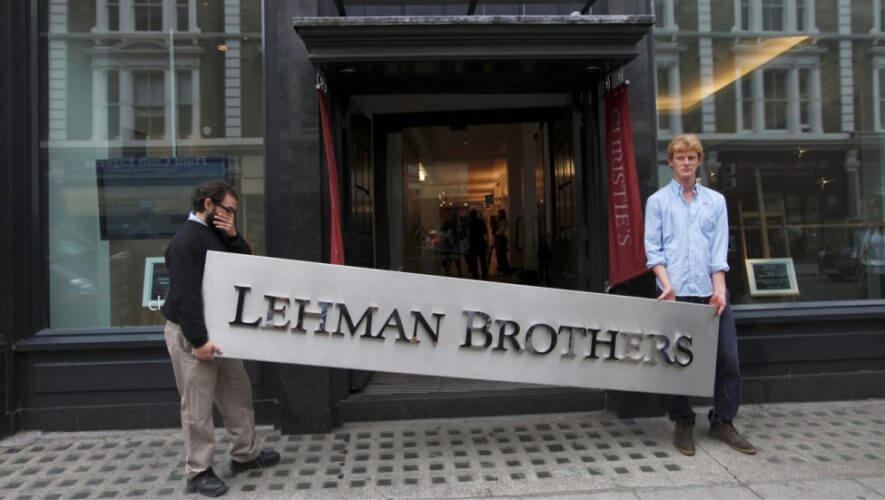
Late yesterday, U.S. Bankruptcy Examiner Anton Valukus released a 2,200 page report that details the collapse of Lehman Brothers. It points the finger at Lehman execs for engaging in shady accounting that Ernst & Young knew about and was comfortable with. Lehman’s Board of Directors were not informed of the questionable accounting treatment.

To put it in more technical terms: Ernst & Young is in deep shit. The lead partner on the Lehman audwed more times than Dick Fuld for crissakes.

The accounting in question was known inside Lehman as “Repo 105.” These transactions moved billions of dollars off of Lehman’s balance sheet that were described by emails in the report as “basically window dressing” and their global financial describing them as having “no substance.” The Times reports that the treatment was so crucial to LEH that one executive, Herbert McCade, was known internally as the “balance sheet czar” and that he described in an email that the treatment was “another drug we r on.”


The really bad part for Ernst & Young is that they were okay with the “drug.” From the report, the lead partner stated that E&Y “had been aware of Lehman’s Repo 105 policy and transactions for many years.” For you wonky types, Lehman was accounting for these “Repo 105” transactions based on guidance from Statement on Financial Reporting Standard 140, Accounting for Transfers of Financial Assets and Repurchase Financing Transactions.

E&Y’s “team had a number of additional conversations with Lehman about Repo 105 over the years,” although they were not involved with drafting the policy nor did the firm provide any advisory services related to the transactions. According to the lead partner on the engagement, the firm simply “bec[a]me comfortable with the Policy for purposes of auditing financial statements.”

The problem, according to the Examiner’s report is that E&Y was okay with the treatment based on the theory:

Ernst & Young’s view, however, was not based upon an analysis of whether actual Repo 105 transactions complied with SFAS 140. Rather, Ernst & Young’s review of Lehman’s Repo 105 Accounting Policy was purely “theoretical.” In other words, Ernst & Young solely assessed Lehman’s understanding of the requirements of SFAS 140 in the abstract and as reflected in its Accounting Policy; Ernst & Young did not opine on the propriety of the transactions as a balance sheet management tool.

According to Lehman’s Global Financial Controller Martin Kelly, “Ernst & Young ‘was comfortable with the treatment under GAAP for the same reasons that Lehman was comfortable.'” Don’t you love it when things work out like that?

Ernst & Young has issued a statement that simply addresses the final audit that the firm performed: “Our last audit of the company was for the fiscal year ending Nov. 30, 2007. Our opinion indicated that Lehman’s financial statements for that year were fairly presented in accordance with Generally Accepted Accounting Principles (GAAP), and we remain of that view.”

SO! E&Y is in a bit of a pickle. Civil suits have already been filed against both firms and more investigations will certainly be coming. If you’ve got some time over the weekend, take a flip through this beauty. We know there is accounting porn in there for some of you.

Report Details How Lehman Hid Its Woes as It Collapsed [NYT]
Examiner: Lehman Torpedoed Lehman [WSJ]
Lehman Brothers Holdings Inc. Chapter 11 Proceedings Examiner’s Report [Jenner & Block]

Preliminary Analytics | 12.21.09

angelo_mozilo.jpgHealth-care bill clears crucial vote in Senate, 60 to 40 – “The vote was the first of three procedural hurdles that Democrats must cross before a final vote on passage of the measure, now scheduled for Christmas Eve.” [Washington Post]
Bye-bye Bo-Tax. Hello, Tan Tax – Angelo Mozilo will not stand for this. [Don’t Mess With Taxes]
Top Ten Ways to Ensure a Smooth Audit – Communication seems to be a theme. There’s a concept. [Mission Accountable]
An Inside Look at JPMorgan Outplacement [FINS]
Dubai World poised to press for loan extensions – No word if DW plans on actually paying the loans back. [Reuters]
IRS Files $8.15 million in Tax Liens Against Sinbad – Despite filing tax returns, Sinbad didn’t pay the tax owed from 1998 to 2006. [TaxProf Blog]
2009: The Year of the Failed Banks – Seven more this past Friday, bringing the total to 140. [The D&O Diary]

UK Regulators: Let’s Try and Quantify Audit Quality

RG-1031.jpgOur friends across the pond have put it out there that as it stands, an audit report is an audit report is an audit report. Regardless of the firm doing the work, the end product is the same and the Professional Oversight Board (POB) wants audit firms to produce, “more quantitative data to better equip investors and companies with the tools needed to scrutinise their auditors.”


It’s long been popular to call an auditor’s product a “commodity” and this appears to be the Brits’ attempt to dispel that notion. The talk of asking auditors to somehow quantify quality has already garnered support in the investing community in the UK:

Michael McKersie, assistant director capital markets at the [Association of British Insurers], said he would welcome more comparative information. “The relative lack of hard quantitative reporting data on the audit firms and global networks has been… a concern. Comparability is really important and we have, in the past, seen no n-comparability [sic] here as a problem.”

Fine idea, although there’s not a single indication of how the quality could be measured and the director of auditing at the POB even admits that ‘The challenge is how can auditors demonstrate quality and those that use their services assess it.’
This whole idea of “comparability” came up because of a POB inspection of showed, “some firms were rewarding staff for attracting business at the expense of promoting audit quality.” So the answer to this problem — from the POB’s point of view — is to slap together a “rate this audit from 1 to 10” system and the firm with the highest score has the best audits?
Audit firms will always claim that their work is of the highest quality regardless of the circumstances but now regulators want them to put that in some quantifiable form. And because we like to keep the pace with our friends in the UK, it probably won’t be long before an ambitious bureaucrat Stateside (e.g. new PCAOB Chairman) will insist on a similar approach.
If there’s any wonky auditors out there that have some ideas how this could be done, we’re all ears but for now we’re firmly in the skeptical camp.
Clients blind on audit quality [Accountancy Age]
Also see: You mean the Big 4 aren’t transparent? [Tax Research UK/Richard Murphy]