Dennis Nally: PwC’s Credibility with Our Clients Is Doing Just Fine, Thankyouverymuch

Awhile back we told you about PricewaterhouseCoopers Global CEO Dennis Nally admitting that the PwC brand had been damaged because of the whole Satyam fraud.

DN has done another interview with the Indian press and he says despite this litng is on the up and up in India for PwC. The long/short of it is that Dennis & Co. are going to keep giving their clients the P. Dubs experience now and forever.

Pretty wide range of questions but we’ve presented the highlights for you.


Was the PwC Magic 8ball broken?

Q: When you look back at it do you think you could have avoided all that happened?

A: I don’t know if we could have avoided it. As we all know this was probably one of the most significant frauds that suddenly has taken place here in India but even in the global market place. So I do not know how you avoid that type of situation.

Where was the P. Dubs swagger when the shit hit the fan? Did you realize that everything was f’d and didn’t know what to do?

Q: [T]he firm didn’t seem to respond in a confident manner. The impression was that it didn’t know what it had been hit by. Do you think it could have been handled better?

A: I think with hindsight you can always do things better and that is part of learning and trying to deal with issues. But quite frankly this was a major event and of course it took us time to understand the pattern and what transpired.

In fact we are still learning and everybody is still learning. Now all the facts aren’t quite out yet but I think we are in the business of being out in the public and when something like this happens and it happens in a negative way, we are part of that. That is just a reality of being in a profession that we are involved with.

Why is this PwC’s fault?

Q: What role did the auditors have to play?

A: You are into an interesting debate and discussion because what is the role on a professional standards for the detection of a fraud. That is one of the areas that has been the focus not only on Satyam but a broader profession wide issue and we certainly welcome that debate.

I think there is an expectation out there in the public that auditors uncover every single fraud that they are involved with and that is not what professional standards call for but there is the public perception that that is what we are there to do. I define that as the expectation gap. If that is the expectation then we need to make sure that we are focused on the right kind of procedures, the right kind of standards, the right kind of reporting which is quite frankly really different than what we do today.

Will you stop all future frauds in India forever and ever and ever?

Q: Can you tell us if India will never see a Satyam again?

A: I wish I had a crystal ball but I don’t. As I said when you have a situation like Satyam or a major fraud I suspect somewhere in the world of corporate reporting, you are going to see another situation like that. Our job is to make sure we are doing everything we can possibly do consistent with the standards that are out there to ensure that we play our role in that process to avoid them.

The new India managing partner came from Singapore? You got something against Indians?

Q:But he has not come from India, you didn’t appoint him from the India firm – he was brought in from Singapore?

A: Gautam is originally from India which is great so it’s little bit of coming home programme.

Q: But it’s not a vote of confidence on the India management?

A: It is not. This is all about ensuring that we get the very best talent to focus on an important market like India and that’s exactly what we have done.

You let everyone down. Speak to them!

Q: A word to all those investors who felt disappointed with PriceWaterhouseCoopers for not alerting them to what was going on in Satyam. What is your message to them today?

A: Whenever we have situation like this, right or wrong, whatever standards are we are part of that and for that we regret what has happened. But this firm is about quality. It’s about doing the right things, it’s about being here for the investor community and we are very much focused on that.

Satyam fiasco has not dented credibility with clients: PwC [Money Control]
CPAs Spanked by SEC for Porn Site Audit

Let it be known that if you are peddling porn and engaged in online pimping, you do not want the SEC on your back.

WebCPA reports that Stephen Corso of Las Vegas and Brian Rabinovitz of Oak Park, CA got the SEC smack down in a Nevada federal court for filing materially false and misleading financial statements from 1999 – 2002 (that’s quite a backlog) and that audit staff – under the boys’ supervision – omitted important info and violated the sanctity of auditor independence during audits of Exotics.com


While the enforcement doesn’t go into specifics, we’re happy to. Exotics.com bills itself as the world’s premiere source for – wait for it – beautiful female adult entertainers. Not to be outdone, Exotics also boasts a veritable cornucopia of escort options including “BDSM & fetish providers, exotic dancers, strippers, sensual and erotic massage specialists, TSTV and other adult entertainment.” It’s that “other that really scares me. Self-billed as the Quicker Pecker Upper (kid you not), the site headline right around the time the SEC brought the heat was “Better than Wives, Girlfriends, and Porn” – and apparently above performing audits according to GAAS?

So, who wants to wildly speculate as to how audit staff violated auditor independence?

Here’s the 2005 release from our friends at the SEC:

[T]he accountants fraudulently participated in audits of Exotics-Nevada’s year-end financial statements and in a review of its quarterly financial statements and failed to conduct those engagements in accordance with GAAS, as required. The Commission also alleges in its complaint that, among other things, the accountants prepared or created many of Exotics-Nevada’s books and records and then audited the financial statements they created. According to the complaint, they also caused their firms to issue false audit reports which, together with the underlying financial statements, were incorporated in Exotics-Nevada’s public filings with the Commission.

Now listen, little auditors, you don’t shit where you live and you don’t audit your own statements. Audit sampling? I could see how it would be hard to resist in this particular instance.

CPAs Disciplined for Porn Site Accounting Fraud [Web CPA]
SEC Complaint

KPMG’s Layoffs in Advisory May Have Made Room for Some Auditors

Happy Hangover Thursday, folks. Hopefully the green food coloring washed off easily this morning.

I was out networking with my Irish brothers last night in midtown New York, quite a few blocks north of my normal after-work locale. Second Avenue bars full of cold beer and burned out white collars, St. Patty’s Day was a welcomed Wednesday relief for those in busy season. The day was over, the night was turning late and, for once, shop talk was put on the back burner. That is, until I heard the phrase “Uncle Peat” used as the object of affection bitterness for a toast.

Obviously, I couldn’t resist.


DWB: “Are you guys auditors?”

Auditor 1: “Yeah, over at KPMG. Hopefully not for long, though.”

DWB: “Nice, nice. Moving on to better things?”

Auditor 2: “Hopefully.”

Auditor 1: “Not soon enough.”

A round of drinks later (toast to Uncle Peat not included) and these Irish-for-the-day gentlemen filled me in about an email circulating around KPMG’s NYC audit practice regarding a temporary rotation into the Transaction Services (TS) practice. TS specializes in mergers & acquisitions work and was — most likely — hit steeply by the rounds of the falling guillotine back in 2008 and 2009.

How does a practice that was hemorrhaging money and resources a year ago now have business blowing through the door at such a fierce rate? If you read anything beyond the usual busy season distractions, it’d come as no surprise to you that the markets are slowly picking up. But service firms typically lag in response, both on the positive (Woo-hoo, new business!) and negative (Sorry, this isn’t about you – this is about the numbers) sides of the equation. Nonetheless, Uncle Peat’s auditors should be leaping at this opportunity. A rotation out of audit can be refreshing, even in the quieter months of summer.

Did KPMG’s advisory shake up and realignment pay off? Is the firm’s leadership blowing smoke to perk up the down-trodden auditors currently drowning in busy season? Was a picture of a giant carrot on a string used in the email? If you received this email, I’d love to read the text. Last night’s informants promised to send it over, but they probably called in with emergency doctor “appointments” this morning.

Are Big 4 Auditors Irrelevant?

Okay people, the calls for the complete obliteration of the accounting world have begun. Check that. It’s more or less the accounting world as it relates to auditors of public companies (i.e. Big 4 auditors).

Steve Goldstein at MarketWatch, for one, is NOT A FAN, “What precise purpose does it serve to have a supposedly independent auditor (paid for by the company) sign off on accounts? From Enron to Lehman to Satyam to Parmalat, it’s clear that the major accountants lack either the skill or the determination (or both) to ferret out fraud.”


So in case you didn’t catch it, he’s calling into question the Big 4’s (our assumption) integrity, competence and fortitude. Oh and before you start huffing about “it’s not the job of the auditor to detect fraud,” we’d argue that’s not even the point any more. Lehman was engaging in what a former CFO calls “shenanigans” that E&Y knew about for years and went along with it. Why? Because Lehman said everything was kosh.

Goldstein goes on:

Company executives already are forced to sign off on their accounts. When they are caught lying, companies face liability over disclosure.

So the threats that keep (some) companies honest are there regardless of whether the reports are audited. The outside auditors themselves are assigned a negligible value by the market.

A solution? Here’s two admittedly out-there solutions that the Securities and Exchange Commission probably won’t adopt.

One is quite simple: get rid of accountants. Who cares? They add no value, and their expenses weigh on the bottom line.

The other would be for someone else to hire the accountant. How about the company’s top five shareholders? While the likes of Fidelity would grumble about the added costs and the free-rider benefit for smaller shareholders, they would certainly have an interest in securing a far tougher audit.

Okay, Big 4 auditors, here’s your homework: explain why auditing for public companies isn’t irrelevant. We’ll listen, we swear. Or just start shooting off at the mouth if you feel it necessary. Goldstein isn’t the first to make this determination. Francine McKenna and Jim Peterson have argued that the value of an auditor’s opinion has been nil for quite some time and they’re both Big 876454 alums. It’s okay if you admit it. Acceptance is the first step.

What exactly is the point of having accountants? [MarketWatch]

Ernst & Young Was ‘Comfortable’ with Lehman’s Shady Accounting

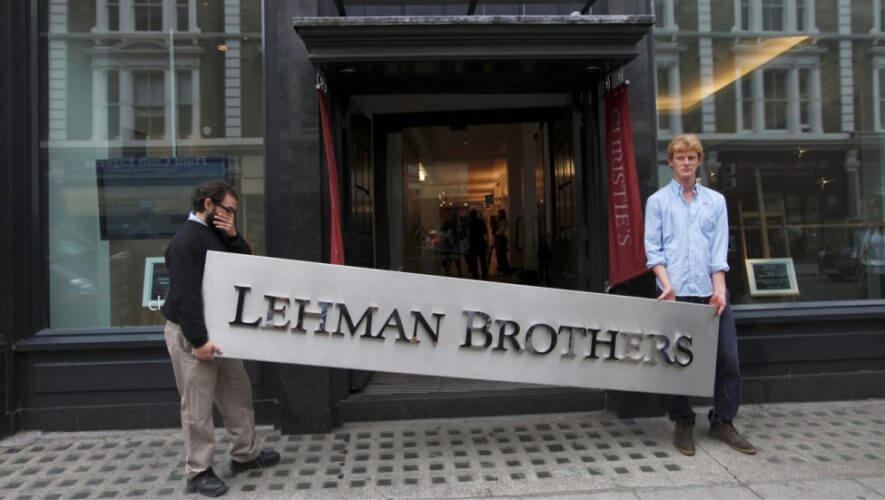
Late yesterday, U.S. Bankruptcy Examiner Anton Valukus released a 2,200 page report that details the collapse of Lehman Brothers. It points the finger at Lehman execs for engaging in shady accounting that Ernst & Young knew about and was comfortable with. Lehman’s Board of Directors were not informed of the questionable accounting treatment.

To put it in more technical terms: Ernst & Young is in deep shit. The lead partner on the Lehman audwed more times than Dick Fuld for crissakes.

The accounting in question was known inside Lehman as “Repo 105.” These transactions moved billions of dollars off of Lehman’s balance sheet that were described by emails in the report as “basically window dressing” and their global financial describing them as having “no substance.” The Times reports that the treatment was so crucial to LEH that one executive, Herbert McCade, was known internally as the “balance sheet czar” and that he described in an email that the treatment was “another drug we r on.”


The really bad part for Ernst & Young is that they were okay with the “drug.” From the report, the lead partner stated that E&Y “had been aware of Lehman’s Repo 105 policy and transactions for many years.” For you wonky types, Lehman was accounting for these “Repo 105” transactions based on guidance from Statement on Financial Reporting Standard 140, Accounting for Transfers of Financial Assets and Repurchase Financing Transactions.

E&Y’s “team had a number of additional conversations with Lehman about Repo 105 over the years,” although they were not involved with drafting the policy nor did the firm provide any advisory services related to the transactions. According to the lead partner on the engagement, the firm simply “bec[a]me comfortable with the Policy for purposes of auditing financial statements.”

The problem, according to the Examiner’s report is that E&Y was okay with the treatment based on the theory:

Ernst & Young’s view, however, was not based upon an analysis of whether actual Repo 105 transactions complied with SFAS 140. Rather, Ernst & Young’s review of Lehman’s Repo 105 Accounting Policy was purely “theoretical.” In other words, Ernst & Young solely assessed Lehman’s understanding of the requirements of SFAS 140 in the abstract and as reflected in its Accounting Policy; Ernst & Young did not opine on the propriety of the transactions as a balance sheet management tool.

According to Lehman’s Global Financial Controller Martin Kelly, “Ernst & Young ‘was comfortable with the treatment under GAAP for the same reasons that Lehman was comfortable.'” Don’t you love it when things work out like that?

Ernst & Young has issued a statement that simply addresses the final audit that the firm performed: “Our last audit of the company was for the fiscal year ending Nov. 30, 2007. Our opinion indicated that Lehman’s financial statements for that year were fairly presented in accordance with Generally Accepted Accounting Principles (GAAP), and we remain of that view.”

SO! E&Y is in a bit of a pickle. Civil suits have already been filed against both firms and more investigations will certainly be coming. If you’ve got some time over the weekend, take a flip through this beauty. We know there is accounting porn in there for some of you.

Report Details How Lehman Hid Its Woes as It Collapsed [NYT]
Examiner: Lehman Torpedoed Lehman [WSJ]
Lehman Brothers Holdings Inc. Chapter 11 Proceedings Examiner’s Report [Jenner & Block]

Accounting News Roundup: CFOs, Staff Are Getting Worn Down by Guidance; Miami Forensic Accountant to Plead Guilty; Big 4 In Pari Delicto Defense Strategy | 03.10.10

A Growing Contagion: Accounting Fatigue Syndrome [CFO Blog]
Anyone getting worn out from all the guidance that is coming from the alphabet soup of regulators? You’re not alone and there appears to be an epidemic, something that CFO Blog has deemed “Accounting Fatigue Syndrome.” The long/short of it is that things are only going to get more complex as FASB and IASB continue to converge their rules and guidance continues to come out of both rule making bodies.

“Like many finance executives, Terry Lillis, CFO of Principal Financial Group, is tired. The constant stream of guidance from regulators and accounting standard-setters — plus the expected inflow of more to come over the next few years — has created “huge accounting fatigue” among his finance staff”


What’s the solution to AFS? How about just getting out of the biz altogether? “While the panelists gave no hope to CFOs who wish the standard-setters would either slow down or cut back on their agenda, they did offer one tip for ending accounting fatigue. ‘If I were a CFO, the first thing I would do is look at my early-retirement provisions,’ quipped J. Edward Grossman, a Crowe Horwath partner.”

High-profile Miami accountant Lew Freeman to plead guilty to fraud [Miami Herald]
A couple of weeks ago we told you about “go-to” forensic accountant turned swindler Lewis Freeman and his legal trouble.

Today he is expected to plead guilty in Miami to embezzling $2.6 million from his clients. Prosecutors have alleged that Freeman, “wrote 162 unauthorized checks to himself totaling about $6 million from the accounts of five failed businesses once under his company’s control, but put back about half of the money.” Freeman has been cooperating with investigators since his arrest but still may face 10 – 20 years in prison.

In Pari Delicto: Are Auditors Equally At Fault In The Big Fraud Cases? [Re: the Auditors]
Francine tackles PwC and KPMG’s defense strategy involving in pari delicto to avoid their roles in fraud cases.

The way I see it, the in pari delicto doctrine is being used like a pair of needle nosed pliers by audit firm defense lawyers to diffuse a bomb – huge liability for some of the biggest frauds in history. The in pari delicto doctrine attempts to pull the auditors’ tails from the fire by excusing any of their guilty acts due to the approval of those acts by potentially equally guilty executives.

Sam Antar at Stanford: Jr. Deputy Accountant Gets a Live Dose of the Criminal Mind

Last week, I took the day off from work and headed down the 101 to sit in on former Crazy Eddie CFO and self-proclaimed criminal Sam E. Antar speaking to Stanford MBA students on, what else, fraud and the criminal mind. Sam is a friend of both JDA and Going Concern and it was excellent to see him recount the Crazy Eddie story to an auditorium of future MBAs.

Ironically, he showed up wearing an SEC baseball cap, which is akin to JDA owning a Federal Reserve hoodie (I do) and didn’t waste a second getting to the point of his visit.

“I’m gonna be the guy that fucks you guys up,” he told the room before beginning the presentation, “I’m a racist and a scum bag but I hate everyone equally.”


I could literally see the audience squirm in response. I already knew Sam was a tad offensive and was counting on getting an extra dose of it; there was no squirming in the media corner.

“Political correctness helps the criminal, not you,” he explained, “It limits your behavior, not the criminal’s.”

Right.

Sam went into auditor standards like the fraud triangle though insisted there is no such thing as rationalization. “Criminals know right from wrong. We don’t plan on failure.”

We even got to see a vintage Crazy Eddie ad spot as Sam’s presentation was spliced with images from the 2006 Court TV episode of Masterminds detailing the Crazy Eddie fraud. That’s for the sections that Sam doesn’t tell you; the details are plentiful in his spiel though don’t let that catch you off guard, he insists he is still just as dangerous as he was before he was caught.

You can get the Crazy Eddie backstory from Sam’s Web site (if you aren’t fortunate enough to be able to play hooky and see him spook Stanford MBA students in person) here, here, and here. If you get the chance, I highly recommend checking him out live (leave your valuables in the car).

And then there’s the video of Sam and Eddie meeting up decades after their fraud was discovered — and Sam gave up his family (and, consequently, himself) — that I recommend you not miss.

So long as there are unqualified auditors being piled into audits they aren’t trained to perform, there will be guys like Sam E. Antar figuring out a way to distract, deter, and delude them, no matter what it takes. For Crazy Eddie, it didn’t take much. What’s to say things have changed?

Sam Antar Photograph by Buck Ennis for Crain’s New York Business and Investment News.

SEC Deadline Watch: Filing Late? Your Life Isn’t Over

Hey CIT team, sorry to hear about the tardy filing. But you know what? Considering all that’s happened in the past year, filing a couple weeks late isn’t that bad. And besides, now that John Thain is running the show, all signs are pointing to a turnaround of epic proportions.

For the rest of you engagements teams that have a late filing, you might have been feeling like LOSERS last night and maybe you spent last night sobbing over it and now it’s carrying over to today. We’re here to give you permission to blow it off.


We realize that doesn’t help the attitude of your [insert pissed off team member] right now but you know what? Shit happens. They’ll get over it too. Will this affect your performance rating? Maybe. Maybe not. One thing is for sure though, there’s plenty of blame to go around so if you’re feeling guilty, knock it off. Will you get shipped off to an engagement where auditors go to die? It’s possible but you’ll probably be better off.

So maybe it feels like the end of the world right now but whatever your sitch is, we assure you, it’s not. This isn’t life or death. You’ve got to work at the IRS to make that claim.

CIT Unable To File Annual Report On Time Monday [Dow Jones via WSJ]
CIT Form 12b-25 [SEC]

SEC Deadline Watch: A Teaching Moment for Young Auditors

With the big SEC deadline on Monday there’s a good chance that some of you might be pulling some weekend hours. These are crucial moments where mistakes are not optional (especially food orders). Your attention to detail is paramount.

Being so close to a deadline can tempt some to cut corners, especially newbies. Things like ghost-ticking (btw, have we mentioned that everyone does this at some point?), plugging numbers and maybe not reading that draft of the 10-K as closely as you should are common shortcuts.


A reader passed along a link to an 8-K (no, not same form but the point is same you dolts) from 2005 for City National Bancshares Corporation of Newark, NJ and despite its age, it serves as an important teaching opportunity (emphasis unnecessary):

RESOLVED, a description of such 6% Non-cumulative Perpetual Preferred Stock, Series E, including the preferences and other rights, voting powers, restrictions, limitations as to dividends, qualifications, and terms and conditions for redemption, all as set by the Board of Direc you fucking new when i asked you liartors of the Corporation, is set forth in the attached Certificate of Designation Establishing the 6% Non-cumulative Perpetual Preferred Stock, Series E and Fixing the Powers, Designations, Preferences and Relative, Participating, Optional and Other Special Rights, and the Qualifications, Limitations and Restrictions, of the 6% Non-cumulative Perpetual Preferred Stock, Series E.

Do you see what happens? Intentional? Accidental? Doesn’t matter now, but somehow this awesome embedded message slipped by someone and now it lives for all eternity at the SEC. The point is, you should probably read every word of the filing to find obvious mistakes like these. Whether you choose to suggest a correction to your client is another matter entirely. Personally, we could handle seeing more of this.

(UPDATE) Was Deloitte’s Warning to Merrill Lynch Lacking Urgency?

Updated to included statement from Deloitte

By now you’ve heard that Ken Lewis and former BofA CFO Joe Price are in a bit of pickle, thanks to NYAG Andy Cuomo.

Long/short is that Drew has filed civil charges claiming that these two ignored advice to disclose information about the losses at Merrill Lynch and went ahead with their plans that ended up screwing just about everyone in the entire world.


According to the complaint, Deloitte was right in the middle of the action back in December of ’08 as the auditor of ML and from the sounds of it, they kinda-sorta encouraged ML’s counsel to disclose the losses saying:

given the losses through what it looks like will be November when it closes, given the fact that you have another couple of billion of dollars coming down the road in goodwill impairment, we believe it’s prudent that you might want to consider filing an 8K to let the shareholders, who are voting on this transaction, know about the size of the losses to date

Okay, so “prudent that you might want to consider” sounds like a “you can disclose the losses if you want to but we’re not making a BFD out of this” but Andy’s complaint sure presents it as a legit warning. We’re not saying that Thomas Graham, the Deloitte partner on Merrill, needed to be hyperventilating while telling ML’s Chief Accounting Officer David Moser that they “might want to consider” the disclosure but Moser was worried enough to tell in-house counsel about it.

Maybe Moser didn’t bring it up because he knew that lawyers don’t take anything auditors say too seriously. If everyone who claims to be worried, was legitimately concerned, perhaps they should’ve considered some double exclamation point usage. Oh well; next time!

We haven’t seen a statement from Deloitte anywhere and they haven’t gotten back to us at this time. Deloitte provided us with the following statement:

Deloitte personnel have testified as part of the New York attorney general’s investigation. Some of that testimony is cited publicly in the attorney general’s complaint. Deloitte is not a party to this proceeding, and due to professional standards, we cannot comment further on confidential client matters.

At the end of the day, BofA’s own general counsel tried to tell KL what’s what and he ultimately got fired so Deloitte ends up being a small fish in this whole situation (i.e. “not a party to proceeding”). Cuomo wants to be governor for crying out loud. Voters don’t give a shit if you file civil complaints against auditors.

NYAG_Complaint

Preliminary Analytics | 12.14.09

Thumbnail image for name-change.jpgH.R. 4173, Summary of Accounting and Audit Related Provisions – Lots to digest here but it’s all important, including a possible GASP name change for the PCAOB. [FEI Financial Reporting Blog]
Invitation to a Conversation: If the Auditors Were Missing from the Financial Crisis — Let’s Ask Why – Jim Peterson doesn’t mince words: “The simple if depressing reason is that their core product has long since been judged irrelevant. The standard auditor’s report is an anachronism — having lost any value it may once have had, except for legally-required compliance.” [Re: Balance/Jim Peterson]
Accenture Makes Right Decision, Drops Tiger Sponsorship – The awkward inappropriateness of the whole situation is now hitting T. Dubs in the wallet, as Accenture jumps into the “your services are no longer needed” camp. He won’t starve. [The Big Four Blog]
Open Letter to the Securities and Exchange Commission (Part 5): Issuer Retaliation Complaint Against Overstock.com – Patrick Byrne’s attempt to develop his own Richard Nixon-esque enemies list has been met with fierce resistance. [Sam Antar/White Collar Fraud]
CPA firms face pricing pinch – “After years of gains since the government started keeping track in December 2003, overall prices for CPA firm services plummeted with the onset of recession in December 2007.” [CPA Trendlines]
Citigroup to Repay $20 Billion of Government Bailout – $25 bil to go. Get on it. [Bloomberg]

Preliminary Analytics | 12.10.09

Thumbnail image for Thumbnail image for Thumbnail image for Thumbnail image for 140px-United_States_Securities_and_Exchange_Commission.pngSEC’s Khuzami ‘Skeptical’ of Auditors’ Claims on Privilege – Privlege shmivlege. [FEI Financial Reporting Blog]
Obama Proposes $12,000 “Cash for Caulkers” Program – Including the most immature montage ever. [TaxProf Blog]
Overstock.com and Patrick Byrne Have an Enemies List That Includes Friends and Family Members of Critics – Using Facebook no less. Anyone surprised? [Sam Antar/White Collar Fraud]
Madoff Auditor Plea May Signal Other Probe – Tax charges thrown in with David Friehling’s guilty plea may indicate that prosecutors may be building a case against other Friehling clients including the Madoff sons. [WSJ]
Broadcom Co-Founder Cleared in Backdating Probe – “U.S. District Judge Cormac J. Carney made the announcement after Samueli, owner of the NHL’s Anaheim Ducks, spent two days testifying for the defense in the fraud trial of a former executive for the telecommunications chip maker. ”You have restored my faith in the criminal justice system,” an exhilarated Samueli told the judge in federal court in Santa Ana.” Avoiding prison will do that. [AP via NYT]