
At an open meeting last week, the PCAOB approved its 2026-2030 strategic plan, the PDF of which was headlined with a message from newbie chairman Demetrios (Jim) Logothetis that clarifies the marching orders he received from the SEC:
When I was sworn in as PCAOB Chairman in February, SEC Chairman Paul Atkins charged me with developing a strategic plan for this organization. He asked that the PCAOB get back to basics. This document fulfills his request. It sets goals and provides clear direction on how we are going to achieve those goals. In short, it’s a roadmap to reform.
This strategic plan, he said, gives the PCAOB an outline to follow so it can focus on its main goal of “protecting investors and furthering the public interest in the preparation of informative, accurate, and independent audit reports.”
So we can safely assume that throwing multimillion-dollar fines at foreign audit firms for their staff sharing answers on checkbox internal training is no longer on the priority list, right? Because that’s something the PCAOB was doing to PwC member firms when PwC member firms maintained flawless inspection rates so it seems there was a disconnect on what factors are important to accurate audit reports.
Giving the floor back to Jim:
As our capital markets grow in value so does the importance of our mission. When Congress created the PCAOB in 2002, total market capitalization was $11 trillion. Today it’s more than $75 trillion.
To that end, every goal and objective in this plan is anchored in the expectation that investors deserve audits performed with rigor, integrity, and consistency. To achieve this, we will modernize our oversight.
We will adopt a modern, risk-based approach to decision-making, improve how we integrate insights across inspections, standards, and enforcement, and ensure that our entire organization operates efficiently and effectively.
In addition, technology, including Super Intelligence, and data are now strategic enablers of successful regulation. The PCAOB will leverage this opportunity to develop new tools to enhance our ability to identify risks and analyze trends.
A few bullet points from the press release so you don’t have to read the whole thing:
The final plan sets forth three overarching and reinforcing priorities:
- Advance Audit Quality and Investor Protection
- Clarify Expectations to Enhance Stakeholders’ Understanding
- Transform as We Execute Our Investor Protection Mission
The plan translates the PCAOB’s strategic priorities into clear goals and objectives. The goals are the following:
- Modernize Standard Setting and Implementation
- Modernize Inspections and Registration Programs
- Sharpen Enforcement Focus on Conduct Harmful to Investors
- Deepen Stakeholder Engagement and Communications
- Strengthen Capabilities That Enable Effective Oversight
For a good time, click around on the 71 comments the PCAOB received on its strategic plan and budget earlier this year. The American Bar Association one is especially fun:
In our view, the PCAOB is not charged with the overall general regulation of the auditing profession. It is not empowered to regulate competition in the market for accounting services or the internal organization and management of accounting firms. As a functional regulator with limited authority, the PCAOB was envisioned to be an expert technical and disciplinary body, not a broad policy making entity. For instance, its mandate does not extend to imposing structural changes such as mandatory auditor rotation2 or internal governance structures of accounting firms.
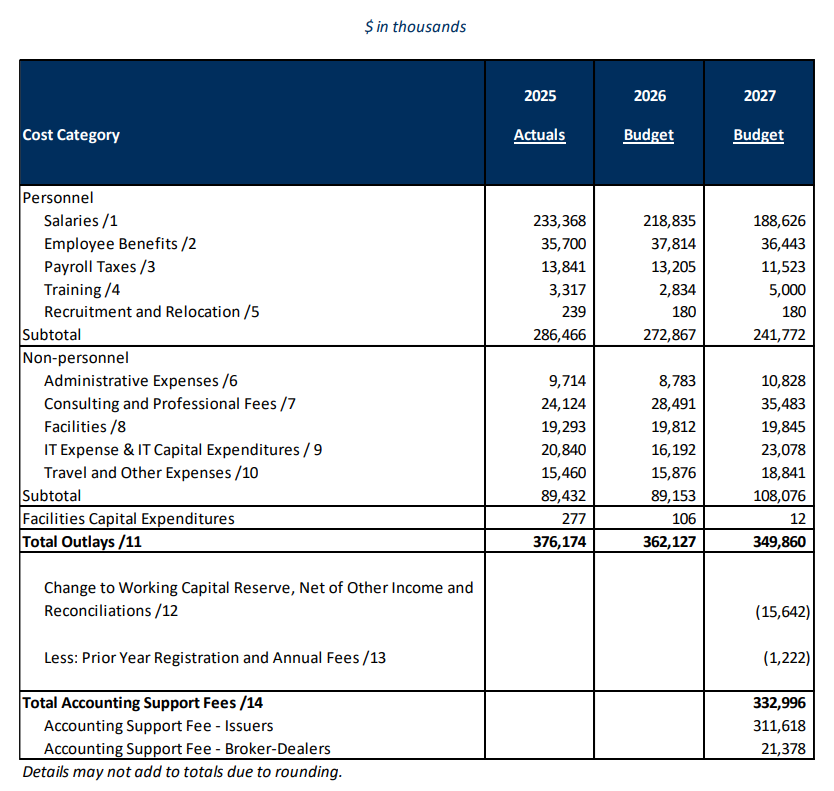
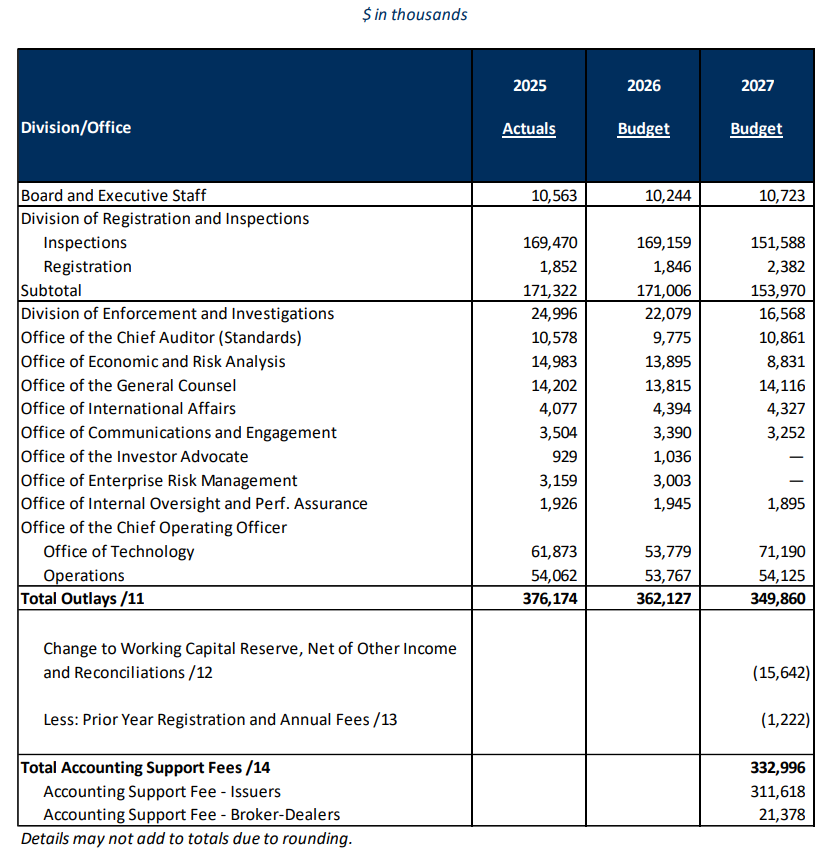
As part of executing their plan, at least for the next year, the PCAOB has approved a budget of $350 million. That seems a little high but it’s actually down from the last couple years:
- 2020: $284.7 million
- 2021: $287.3 million
- 2022: $310.3 million
- 2023: $349.5 million
- 2024: $384.7 million
- 2025: $399.7 million
- 2026: $362.1 million
We can see where the 2027 money is going and compare to 2025 and 2026 below. TLDR: Salaries are down, non-personnel expenses are up, enforcement division is down.
The PCAOB’s 2027 budget is subject to SEC approval.
The next few years could be interesting for the PCAOB and for everyone who finds themselves on the graphite end of inspection staff pencils. OR it could be same as last year minus the headlines about European firms eating record fines for inconsequential stuff everyone does.
Related, probably: